


What Is a Prostaglandin-Free Lash Serum, and Should You Use One?

It's late, you've finally taken your makeup off, and you pick up a lash serum you bought on a whim. Then you flip the box over and see an ingredient you can't pronounce (and a vague memory of a headline about eye color changing). A prostaglandin-free lash serum is a lash conditioner made without prostaglandin analogs, the drug-like ingredients linked to iris darkening and eyelid changes. Our own Eyelash Growth Serum is made without them, so here's what those ingredients are, how to spot them on a label, and what a prostaglandin-free formula can do for the look of your lashes. This guide is for anyone comparing over-the-counter lash serums. It is not a guide to Latisse, which is a prescription drug your doctor manages.
Key Takeaways
- The short answer: A prostaglandin-free lash serum leaves out prostaglandin analogs and usually relies on peptides, vitamins and plant extracts to condition lashes.
- What prostaglandins are: Bimatoprost is the prescription drug in Latisse, and look-alike ingredients such as isopropyl cloprostenate show up in some cosmetic serums.
- Why people avoid them: The FDA label for Latisse lists likely permanent brown iris darkening and eyelid darkening as warnings.
- How to check: Read the full ingredient list and look for names that end in "prost," "prostenate" or "prostamide."
- What to expect: Peptide serums have far less published research behind them, so treat any result as a cosmetic, look-of-fuller-lashes effect.
What Our Customers Ask
The question people search most is "how do I know if my eyelash serum has prostaglandins?" For our serum, the answer is on the product page: we publish the full ingredient list, from water and hyaluronate through the peptides to biotin, and no prostaglandin analog appears on it. The second question is how to apply it. Remove your makeup with an oil-free remover or cleanser, apply a thin layer along your lashes with one dip for both eyes, let the serum dry completely before any other product, and let it work overnight. We also ask you to avoid direct contact with the eyes, to patch test first and stop if you see redness, and not to use it if you are pregnant, nursing or under 18. You'll find it, with our mascara, in our lash collection.
What Is a Prostaglandin-Free Lash Serum?
A prostaglandin-free lash serum is a lash product made without prostaglandin analogs, the hormone-like ingredients borrowed from glaucoma eye drops. Instead, these serums usually combine peptides, vitamins such as biotin or panthenol, and plant extracts. Their job is to condition lashes so they look longer and fuller, without the side effects tied to prostaglandins.
People started asking for this label because the most famous lash product is actually a drug. When a serum makes a big promise, many shoppers now want to know which camp it belongs to before it goes near their eyes. A prostaglandin-free formula answers that question up front.
The label is a "free from" claim, so it tells you what's missing rather than what's inside. Two prostaglandin-free serums can have very different ingredients. That's why it pays to read the whole list, which we cover below. If you're comparing formulas, look at how a brand lists its ingredients: we list every one of ours on the product page.
This does not apply when a brand only says "hormone-free" or "gentle." Those words are not the same claim, so check the ingredient list for yourself.
What Is Prostaglandin in Lash Serum?
Prostaglandin in lash serum means a prostaglandin analog: a lab-made compound similar to natural prostaglandins, which are fat-based messengers in the body. In lash products, these analogs act on the lash's growth cycle, which is why they are classed so differently from conditioners.
The best-known one is bimatoprost. It's the active ingredient in Latisse, which the FDA approved as a prescription treatment for hypotrichosis (too few or too short lashes), according to its FDA label on DailyMed. The same ingredient is used in a glaucoma eye drop. The American Academy of Ophthalmology (AAO) notes that many over-the-counter lash serums use a related ingredient, isopropyl cloprostenate, which is not FDA approved.
So there are really two groups. Latisse is a prescription drug that a doctor oversees. Cosmetic serums with analogs sit in a gray zone, sold without a prescription. The AAO puts it plainly: because these serums have not been FDA tested, their safety and effects are not known. You can compare what's inside a conditioner-style formula on our serum's product page.
| Lash serum with a prostaglandin analog | Prostaglandin-free lash serum | |
|---|---|---|
| Typical actives | Bimatoprost (prescription Latisse) or a cosmetic analog such as isopropyl cloprostenate | Peptides such as biotinoyl tripeptide-1, plus panthenol, biotin and plant extracts |
| How to spot it | A name ending in "prost," "prostenate" or "prostamide" | No "prost" name anywhere on the list |
| Regulatory status | Latisse is FDA approved as a prescription drug; cosmetic analogs are not FDA tested (AAO) | Sold as a cosmetic; no FDA review of its effect |
| Documented side effects | Iris darkening that is likely permanent, eyelid darkening, redness and itching (Latisse label) | Irritation is the usual risk, so patch test first |
| Evidence | Prescription trials run to 16 weeks (Latisse label) | Small or brand-linked studies only |
The common mistake is assuming "cosmetic" means "mild." An analog can be in a cosmetic and still behave like a drug ingredient.
Why Choose a Lash Serum Without Prostaglandin?
People choose a lash serum without prostaglandin mainly to avoid the side effects documented for prostaglandin analogs on the Latisse label and by the American Academy of Ophthalmology. These include iris darkening, eyelid darkening, irritation and changes to the fat around the eyes.
The Latisse label lists the main warnings. It advises patients about increased brown iris pigmentation "which is likely to be permanent," and eyelid darkening that has been reported to reverse in most people after stopping. The most common side effects in its trials were itchy eyes, eye redness and skin darkening, each in about 3% to 4% of patients. The AAO says darkening of the iris cannot be reversed.
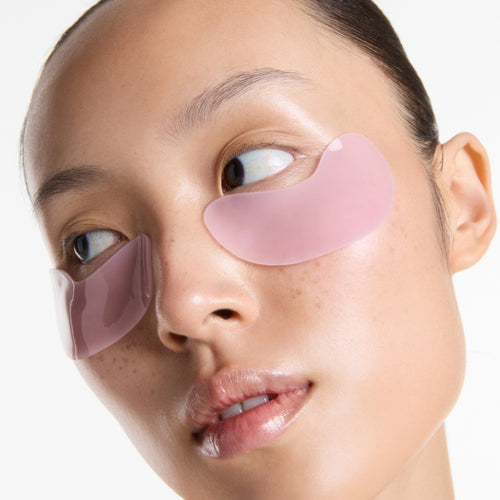
Fat loss around the eyes is the other concern. Researchers writing in the Aesthetic Surgery Journal in 2022 examined whether prostaglandin lash lengtheners cause eyelid fat and volume loss, the pattern doctors call prostaglandin-associated periorbitopathy. In January 2026, France's health agency, ANSES, described the case of a young woman whose left eye turned darker and who lost fat around both eyes after five months of daily use of a cosmetic lash serum containing isopropyl cloprostenate. If you already notice hollows under your eyes, our guide on whether under-eye patches work covers the cosmetic side of that area.
This does not apply when your doctor has prescribed Latisse for you. In that case, follow their advice and the label, and report any changes at your check-ups.
How Do You Know if Your Eyelash Serum Has Prostaglandins?
You can tell if an eyelash serum has prostaglandins by reading its full ingredient list, usually on the box or the brand's product page. Prostaglandin analogs have long chemical names, and most of them contain "prost" somewhere in the word.
If you've ever squinted at a tiny ingredient list and given up, you're not alone. The print is small and the names are long. Here's what to look for:
- Isopropyl cloprostenate: The analog the AAO and ANSES both name in cosmetic lash serums.
- Ethyl tafluprostamide: Sometimes listed as dechloro dihydroxy difluoro ethylcloprostenolamide.
- Methylamido-dihydro-noralfaprostal: Another analog reviewed by the EU's Scientific Committee on Consumer Safety.
- Bimatoprost or latanoprost: Drug names you'd usually see on prescription products.
- Anything ending in "prost," "prostenate" or "prostamide": Treat it as a prostaglandin analog until you know otherwise.
Read the whole list rather than the front of the box, because "free from" claims vary from brand to brand. If a list stops after a few "key ingredients," email the brand and ask for the full INCI (ingredient) list. The same check works for brow products, including our eyebrow serum.
The common mistake is relying on the marketing name. A serum called "natural" or "botanical" can still contain an analog further down the list.
What Does a Peptide Lash Serum Actually Do?
A peptide lash serum is a prostaglandin-free formula built around peptides, which are short chains of amino acids that brands use to condition lashes. Two common ones are biotinoyl tripeptide-1 and myristoyl pentapeptide-17, used so lashes look longer and fuller.
Our serum uses both of those peptides, plus oligopeptide-10, alongside panthenol, hyaluronate and biotin. Published research on peptide lash serums is still early: when we looked on 2026-11-03, we found small and brand-linked studies rather than a large independent trial. That's why we describe ours by what you'll see and feel, conditioned lashes that look longer and fuller, rather than by what it does to the growth cycle.
So set your expectations around appearance. A good conditioner can make lashes feel softer and look healthier, because hydrating ingredients such as panthenol and hyaluronic acid coat each lash. For the biggest visible difference, pair a serum at night with mascara in the day, such as our 2-in-1 Serum Mascara. If you've tried home remedies too, our post on castor oil for eyebrows looks at that evidence the same way.
This does not apply when a product shows before-and-after photos as proof. Photos can't show lighting, mascara or lash tints, so treat them as marketing.
Our Eyelash Growth Serum at a Glance
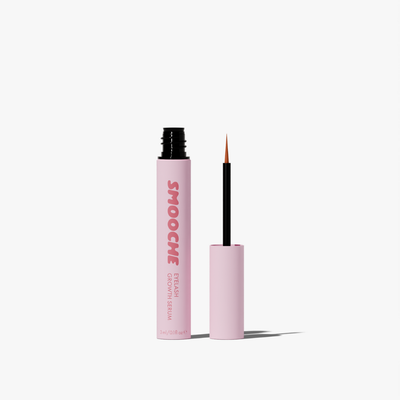
Our Eyelash Growth Serum is a prostaglandin-free lash serum you brush along the lash line at night. It suits anyone who wants a conditioning serum without prostaglandin analogs. It isn't for anyone who is pregnant, nursing or under 18, or for eyes that are irritated.
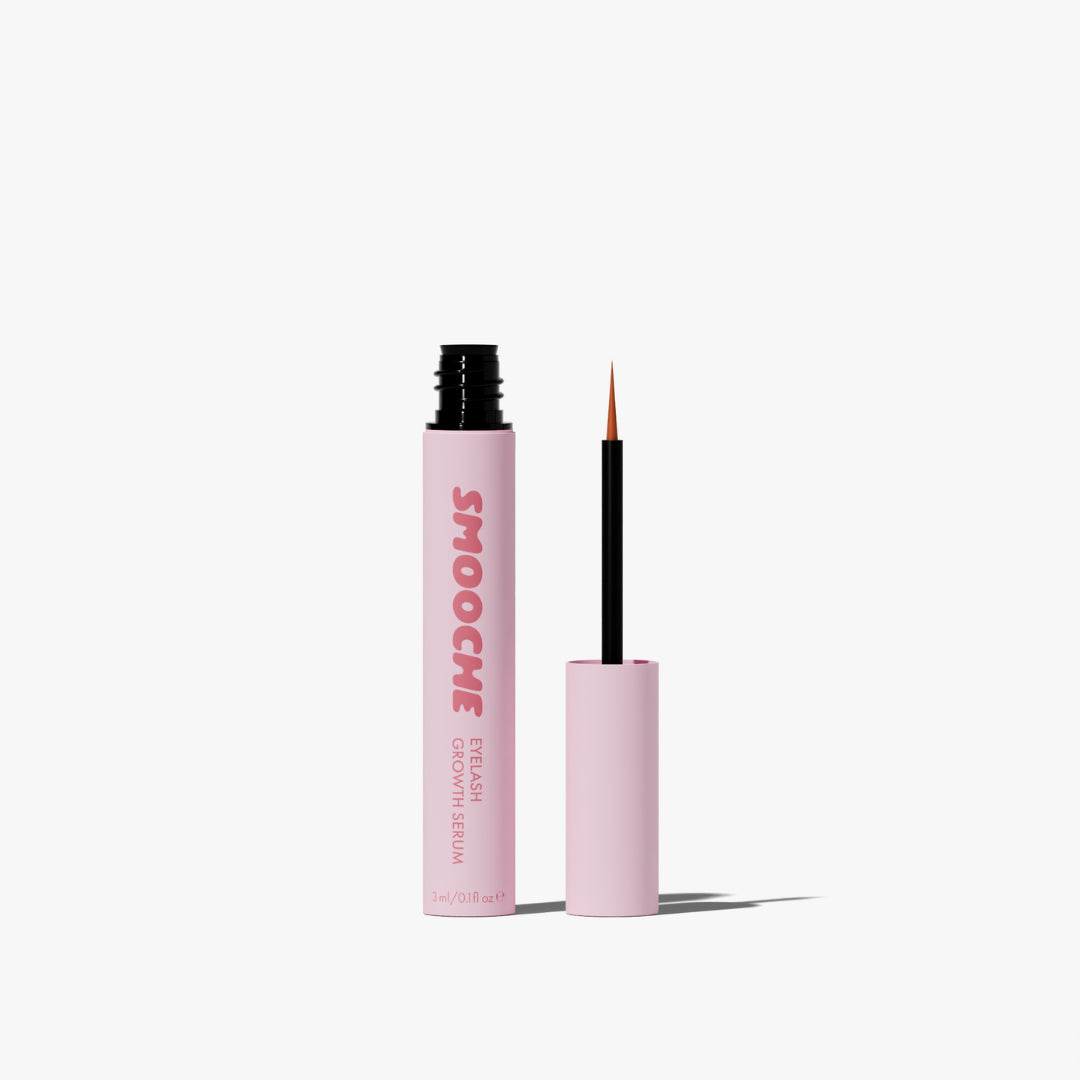
- Prostaglandin-free: No prostaglandin analog anywhere on the ingredient list.
- Conditioning formula: Peptides, panthenol, hyaluronate, biotin and vitamin E for softer lashes that look longer and fuller.
- Easy nightly step: One dip for both eyes, dry fully, leave on overnight.
The formula is vegan and cruelty-free, with no sulfates or parabens. Read the full ingredient list on the product page.
How Long Does Lash Serum Take to Work?
How long lash serum takes to work depends on the type of serum and on your lash growth cycle, and even the prescription drug needs about two months (eight weeks). So any serum needs daily use and patience.
The Latisse label is the clearest benchmark we have. It says the effect is gradual and "not significant in the majority of patients until 2 months," and its main study ran for 16 weeks. The same label says lashes return to their previous appearance after you stop. A conditioning serum works on how lashes look and feel, so many people notice softer lashes sooner than any change in fullness.
| When | What to expect | Source |
|---|---|---|
| Day 1 | Take a same-light photo without mascara | This guide |
| 2 months (about 8 weeks) | The point at which the Latisse effect becomes significant for most patients | Latisse label |
| 8 to 12 weeks (2 to 3 months) | The earliest fair point to judge a prostaglandin-free conditioner | This guide |
| 16 weeks (about 4 months) | Length of the main Latisse study | Latisse label |
| After stopping | Lashes return to their previous appearance | Latisse label |
Give any serum at least 8 to 12 weeks (two to three months) of nightly use before you judge it; that's the same window we give for our own serum. Take a photo in the same light at the start, without mascara, so you can compare fairly. Lashes shed and regrow in cycles, a topic we cover in our guide on whether eyebrows grow back, which works the same way for brows.
The common mistake is stopping and restarting. Skipping nights resets your comparison, and you'll never know if the serum did anything.
Is a Lash Serum Safe for Sensitive Eyes and Contact Lenses?
A lash serum for sensitive eyes should be prostaglandin-free, applied only to the upper lash line, and patch tested first. Even gentle ingredients can irritate if they get into your eye, so how you apply matters as much as the formula.
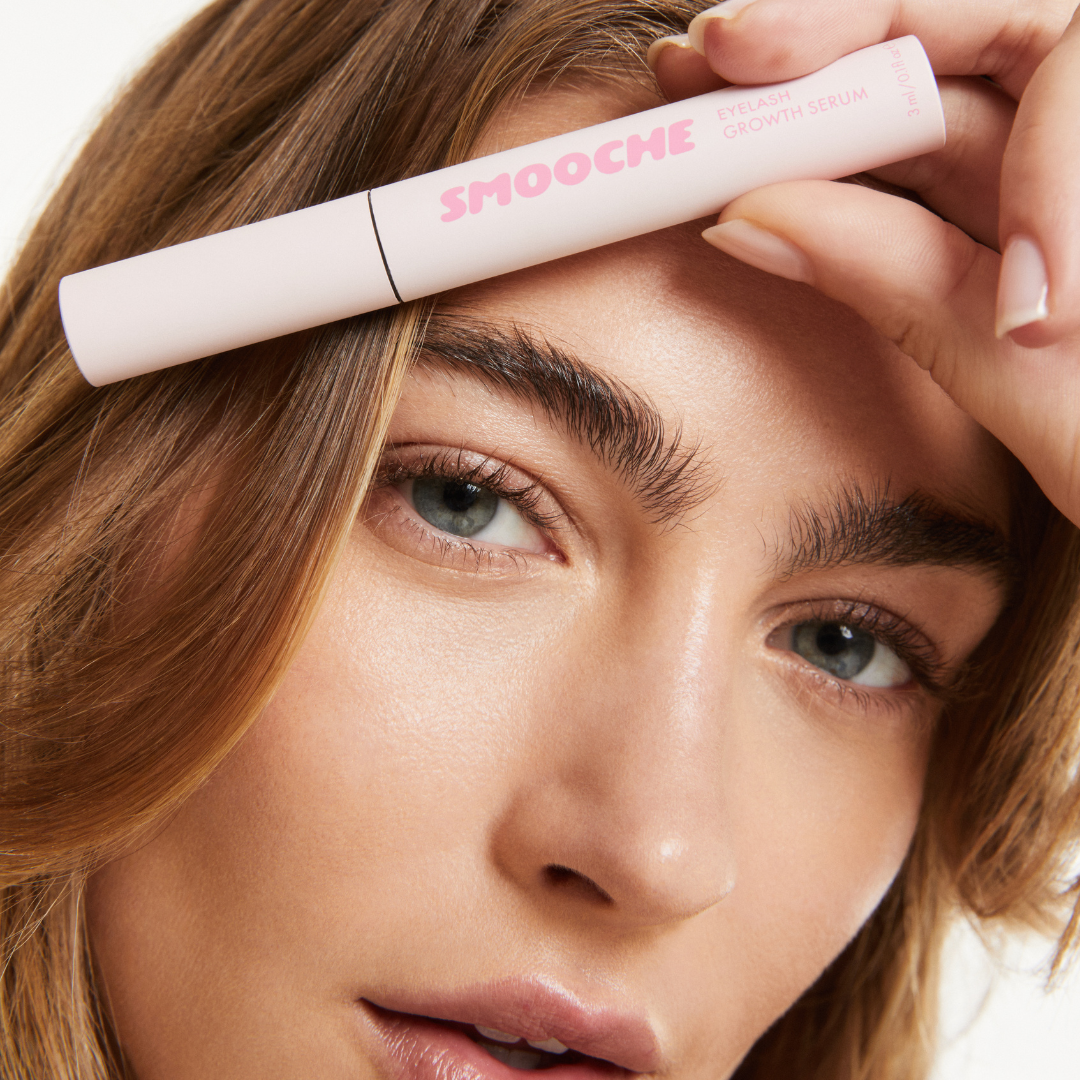
Patch test before you use any new eye-area product, ours included. The American Academy of Dermatology (AAD) suggests testing it first on a hidden spot, like the crease of your elbow, twice daily for about a week and a half; if that spot turns red or itchy, keep the product away from your eyes. Apply a thin line at the lash base with the brush, never inside the lid.
Contact lens wearers need one extra step. The Latisse label tells users to take lenses out before applying and wait 15 minutes before putting them back in. That's sensible for any serum, so let it dry fully first. If you're simplifying eye makeup while you test a new serum, our guide to makeup for older women has gentle options.
This does not apply when you have an eye condition, use glaucoma drops, or have had recent eye surgery. Talk to your eye doctor before using any lash serum.
How Does Smooche Approach a Prostaglandin-Free Lash Serum?
Our Eyelash Growth Serum is prostaglandin-free, and we publish the whole ingredient list so you can check it yourself: Aqua, Hyaluronate, Pentylene Glycol, Panax Ginseng Extract, Swertia Japonica Extract, Pumpkin Seed Extract, Acorus Calamus Root Extract, Panthenol, Serenoa Serrulata Fruit Extract, Biotinoyl Tripeptide-1, Myristoyl Pentapeptide-17, Oligopeptide-10, Tocopherol and Biotin. No name on it ends in "prost."
Our application steps are the ones in the customer block above: remove makeup with an oil-free remover, apply a thin layer along your lashes with one dip for both eyes, let it dry fully, and leave it on overnight. Keep it out of direct contact with your eyes, patch test first, and don't use it if you are pregnant, nursing or under 18.
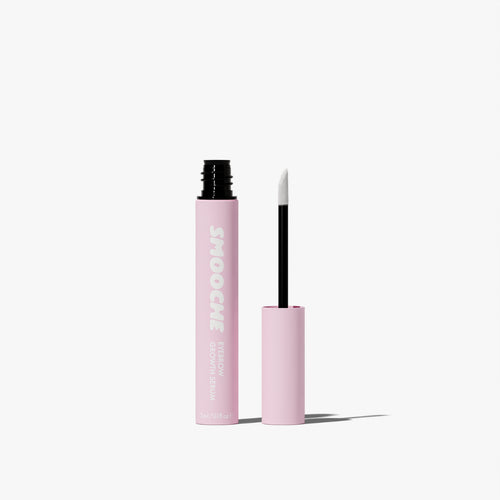
If you'd like to care for brows at the same time, our Lash & Brow Growth Kit pairs the lash serum with our brow serum. For the day, our mascara gives lashes length and definition while the serum does its overnight work.
Prostaglandin-Free Lash Serum Checklist
- Read the full ingredient list before you buy.
- Avoid names ending in "prost," "prostenate" or "prostamide."
- Ask the brand for the full INCI list if only key ingredients are shown.
- Patch test on your inner elbow for 7 to 10 days.
- Remove contact lenses and wait until the serum is dry before putting them back.
- Apply a thin line at the base of your upper lashes only.
- Take a same-light photo on day one and use the serum nightly for at least 8 to 12 weeks.
- Stop and see an eye doctor if you notice redness, pain or any change in eye color.
Frequently Asked Questions
What Is Prostaglandin and Why Is It Bad in Eyelash Serum?
Prostaglandin in eyelash serum is a lab-made analog of a natural body compound, used because it acts on the lash growth cycle. The concern is side effects: the Latisse label warns about likely permanent brown iris darkening and eyelid darkening. Cosmetic analogs such as isopropyl cloprostenate have not been FDA tested, according to the AAO.
How Do I Know if My Eyelash Serum Has Prostaglandins?
Your eyelash serum likely has prostaglandins if its ingredient list includes a name ending in "prost," "prostenate" or "prostamide," such as isopropyl cloprostenate. Check the full list on the box or the brand's site. If you can't find it, ask the brand directly.
Do Prostaglandin-Free Lash Serums Work?
Prostaglandin-free lash serums work as conditioners that can help lashes look longer and fuller, especially when you pair them with mascara, rather than as drugs that act on the growth cycle. The research on peptide serums is limited, so results vary from person to person. Use one every night for at least 8 to 12 weeks before you decide.
What Are the Side Effects of Lash Serum?
Lash serum side effects depend on the formula: for prostaglandin analogs, the Latisse label lists itchy eyes, eye redness and skin darkening as the most common, each in about 3% to 4% of patients. Iris darkening is rarer and likely permanent. For prostaglandin-free serums, the usual risk is irritation, so patch test first and stop if your eyes sting.
Is a Vegan Lash Serum the Same as a Prostaglandin-Free One?
A vegan lash serum is not automatically prostaglandin-free, because the vegan label only means the formula contains no animal-derived ingredients. Prostaglandin analogs are made in a lab, so they can appear in vegan products. Check for both claims, or read the ingredient list yourself.
Can You Use Lash Serum With Contact Lenses?
Lash serum can be used by contact lens wearers as long as you take your lenses out before applying it and let it dry fully. The Latisse label advises waiting 15 minutes before putting lenses back in. Stop if your eyes feel irritated.
What Do Dermatologists Recommend for Thin Eyelashes?
Thin eyelashes that change suddenly are worth showing to a dermatologist or eye doctor, who can look for a cause and decide whether a prescription such as Latisse suits you. Latisse is the FDA-approved option, used under a doctor's care. For a cosmetic, look-of-fuller-lashes goal, a prostaglandin-free serum and a good mascara are simpler choices.
Find Your Lash Serum
Ready for a serum with a label you can read in full? Try our prostaglandin-free Eyelash Growth Serum: patch test first, then use it every night for 8 to 12 weeks and compare your day-one photo.
Featured in this guide
Our Eyelash Growth Serum
A prostaglandin-free nightly serum for lashes that look longer and fuller.
Shop the lash serum30-day money-back guaranteeKeep reading
Sources
- DailyMed, Latisse (Bimatoprost) Prescribing Information (2024)
- American Academy of Ophthalmology, What You Should Know About Eyelash Growth Serums (2019)
- ANSES, Eyelash Growth Serums May Change Your Eye Colour (2026)
- Aesthetic Surgery Journal, Prostaglandin Lash Lengtheners and Eyelid Fat Loss (2022)
- Dermatologic Surgery, Safety of Prostaglandin Analog Eyelash Products (2021)
- American Academy of Dermatology, How to Test Skin Care Products
- Tags: Eye care Ingredients Lash serum Lashes