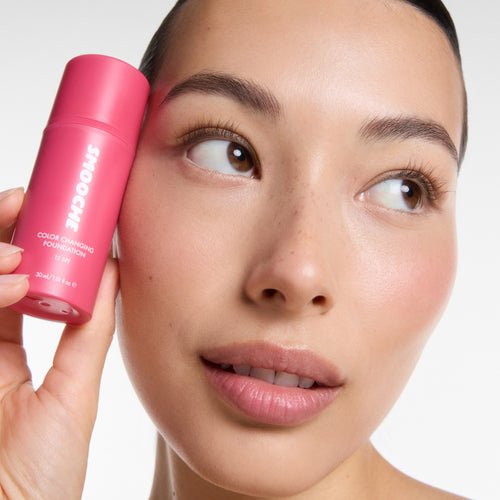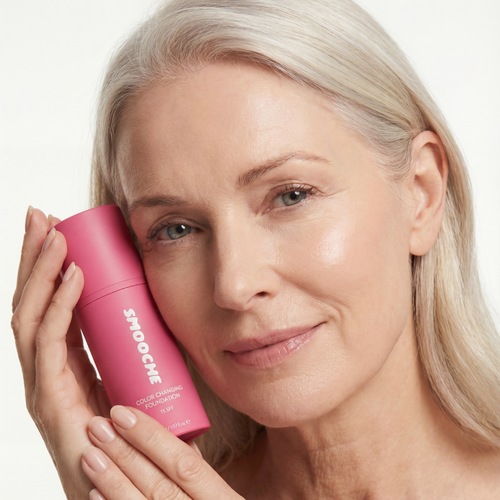


Color Changing Foundation for Mature Skin: How to Make It Work

You blend in your foundation at 8am, the shade looks right, and by lunch it has found every line around your eyes. If that sounds familiar, you're not alone.
Here's the answer up front: a color changing foundation can work well on mature skin, and we make one. Our Color Changing Foundation comes out of the pump white and turns to your skin tone while you blend, so there is no shade to choose. It is made for all skin tones. How it sits on dry patches and fine lines comes down to prep and a light hand, so this guide covers both, along with a plain account of what it will not do.
Key Takeaways
- The short answer: Color changing foundation works on mature skin, and moisturized skin is what makes it look smooth.
- Ours is one shade: Our Color Changing Foundation starts white, shifts as you blend and is made for all skin tones.
- Prep matters most: Mature skin is often drier, so moisturizer and a few minutes of wait time help the finish look smooth.
- Go thin: One pump first, then a second layer only where you need it, sits better on lines than one thick coat.
- SPF 15 is a bonus: Wear a broad-spectrum sunscreen of SPF 30 or higher underneath, as the American Academy of Dermatology advises.
What Our Customers Ask
Among the questions people search about our Color Changing Foundation, "is Smooche foundation good for mature skin" sits right next to "how to apply Smooche foundation". On skin over 50, the first answer depends on the second.
It is a good match for mature skin, and we made it for all skin tones. The formula is dermatologist-tested and non-comedogenic, and we recommend a patch test first if your skin is particularly sensitive.
Application decides the rest. Every step is on our foundation's product page, and the sections below adapt them for dry skin and fine lines.
Does Color Changing Foundation Work on Mature Skin?
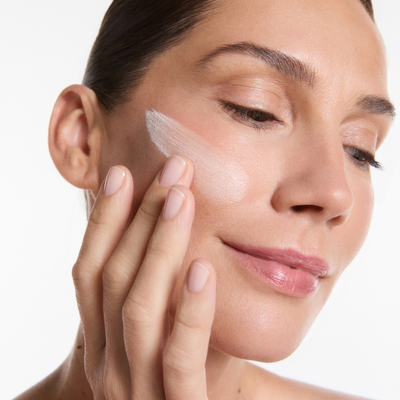
Color changing foundation can work on mature skin when your skin tone falls inside its shade range and your skin is moisturized first. The foundation goes on pale, then shifts toward your skin tone as you blend. The finish on fine lines depends more on prep and thin layers than on the color change itself.
The color change solves one problem, which is picking a shade. In our formula, micro-encapsulated pigments react to your skin's warmth and undertones as you blend, shifting within seconds to match.
Texture is a separate job, because it comes down to the skin underneath and how much product you apply. The American Academy of Dermatology (AAD) notes that skin in your 60s and 70s often becomes thinner and more prone to age spots and creases. Dry patches grab pigment, and creases collect product. The foundation handles the match, and your prep handles the surface.
Here is a quick way to decide whether it is a good fit for you:
| Color changing foundation is a good fit if | It is a poor fit if |
|---|---|
| You want one shade that adapts to your skin tone | You prefer to pick an exact shade number from a lineup |
| You want one bottle that ends the shade guessing | You want heavy, full coverage from a single layer (ours gives medium coverage that you can build) |
| You moisturize and let skin settle before makeup | You apply foundation on dry, unprepped skin and expect the color change to blur lines |
The common mistake is expecting the color change to also blur lines on its own. For what to look for in any formula, see our guide to foundation for mature skin.
How Does Color Changing Foundation Behave on Dry or Textured Skin?
Color changing foundation on dry or textured skin can cling to flaky patches and gather in creases if the skin is not hydrated, because the pigment settles wherever the surface is uneven.
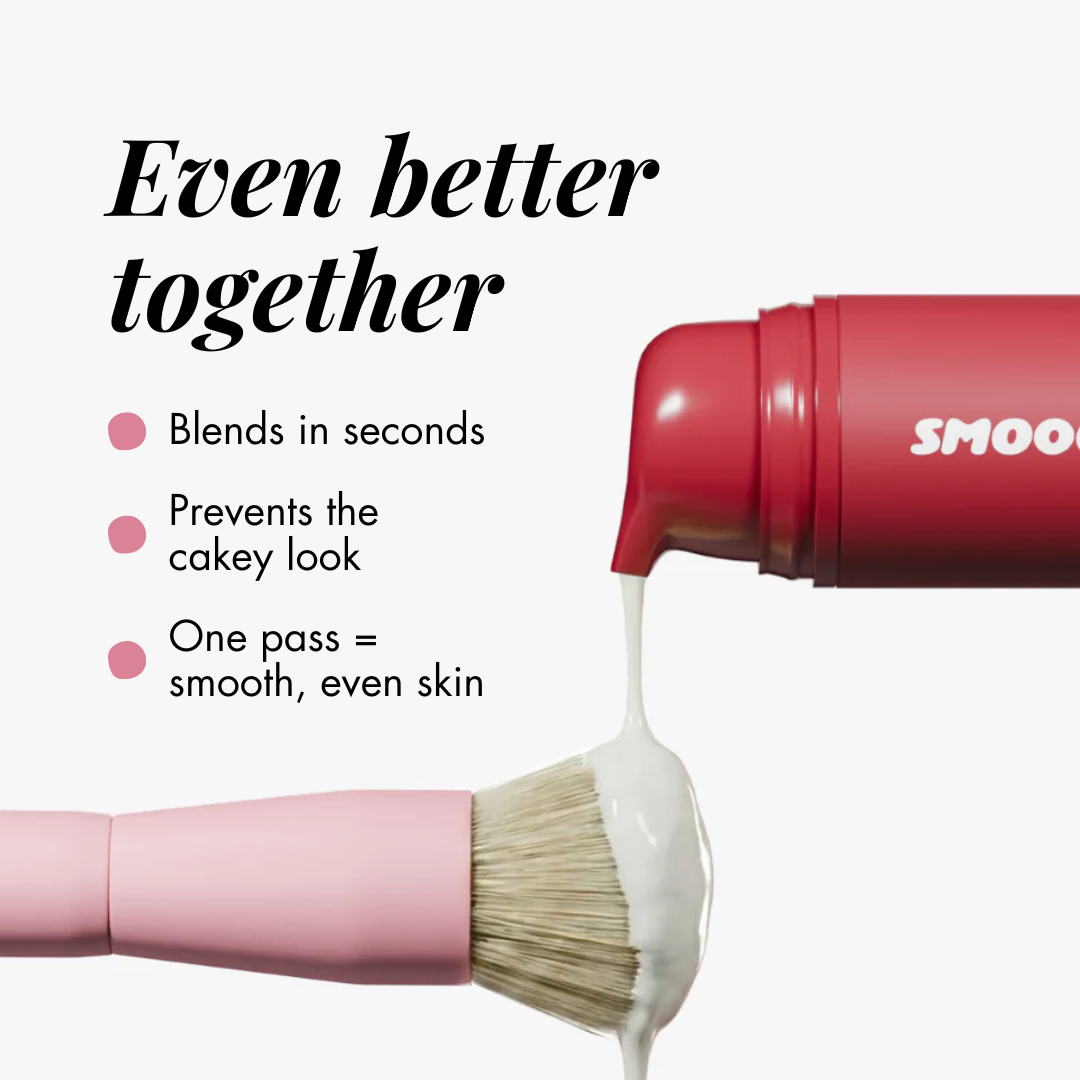
Blending is the reason. You have to keep going until the color stops changing, and on dry skin that extra blending can drag product into lines or lift flakes. The AAD explains that skin in your 60s and 70s is thinner and loses water more easily, which is why flaky patches show up more often than they did at 40.
Ours has a naturally soft, medium coverage finish with a velvety matte texture. Matte textures can look flat on very dry skin, so give our velvety matte formula a hydrated base.
This does not apply to an oily T-zone. If yours is oily while your cheeks are dry (a very common combination), hydrate the cheeks and keep the T-zone lighter. Our science explainer covers how color changing pigments work.
How Should You Prep Mature Skin Before Color Changing Foundation?
Prep mature skin for color changing foundation by cleansing gently, applying moisturizer and sunscreen, and waiting a few minutes until they settle. A primer is optional, but a smooth, hydrated surface makes the shade shift more even.
Moisturizer gives the foundation something to slide over, because pigment sticks to dry spots. The AAD recommends a creamy moisturizer for dry, mature skin, applied within 3 minutes of bathing.
Sunscreen goes on after moisturizer. The AAD says skin takes about 15 minutes to absorb sunscreen, so put it on before the rest of your makeup and let it dry.
Our own first step says the same thing in fewer words: start with moisturized skin and your usual primer or hydrating cream.
The common mistake is applying foundation while moisturizer is still wet, because the two mix and the foundation can slide or patch. If you use a serum, put it on first, then moisturizer, then sunscreen, and let each settle.
How Do You Apply Color Changing Foundation Over Fine Lines?
Apply color changing foundation over fine lines by dotting a small amount on the center of the face, blending outward, and pressing rather than dragging. Build a second thin layer only where you need more coverage.
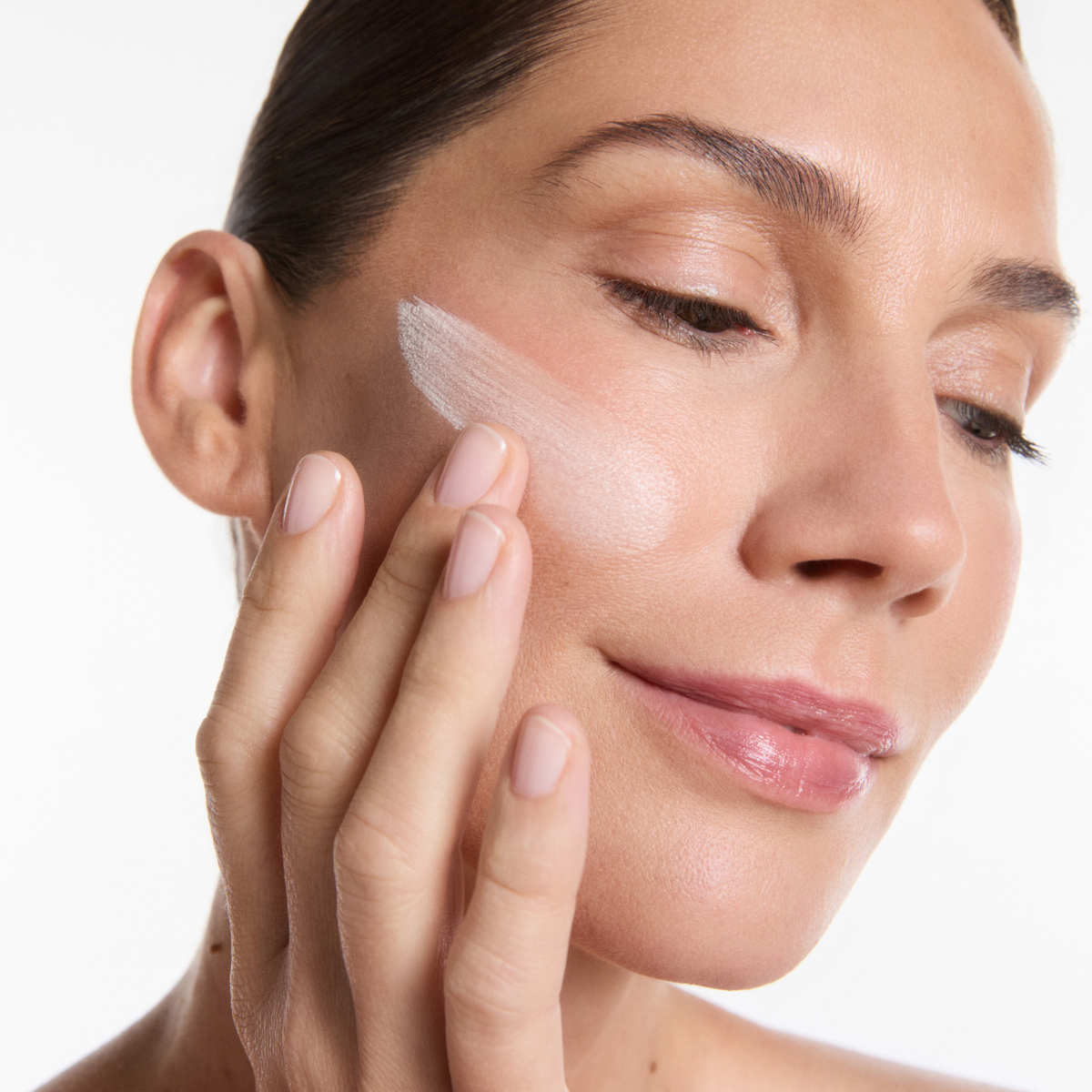
The center of the face usually needs the most coverage, while the outer face and eye area have the most movement and the most lines. Pressing with a brush or sponge leaves product on top of creases instead of pushing it in.
Makeup artist Essie Cohen, interviewed by Byrdie, gives the same advice on how to apply foundation on mature skin: start from the center of the face, blend it outward, and add coverage only where you need it. Our application steps take the same route:
- One pump to start: Dispense it onto the back of your hand. That amount gives natural, "your skin but better" medium coverage.
- Dot the center: Place it on your forehead, cheeks, nose and chin.
- Blend in circles: Work outward from the center using circular motions until the color stops shifting.
- Go back only where needed: Press a second thin layer onto redness or discoloration, and leave lined areas with the first.
- Finish lightly: Dab concealer on any spot that still shows, then add a light dusting of translucent powder on the T-zone.
This does not apply when you prefer sheer coverage everywhere. Then skip step 4 and use concealer on the spots you want hidden. Our guide to foundation that doesn't settle into fine lines covers formula features to look for.
Our Color Changing Foundation at a Glance
One bottle, one shade: our liquid foundation leaves the pump white and becomes your skin tone while you blend. The formula is based on Korean beauty innovation, and we made it for all skin tones. One coat will not give heavy coverage.
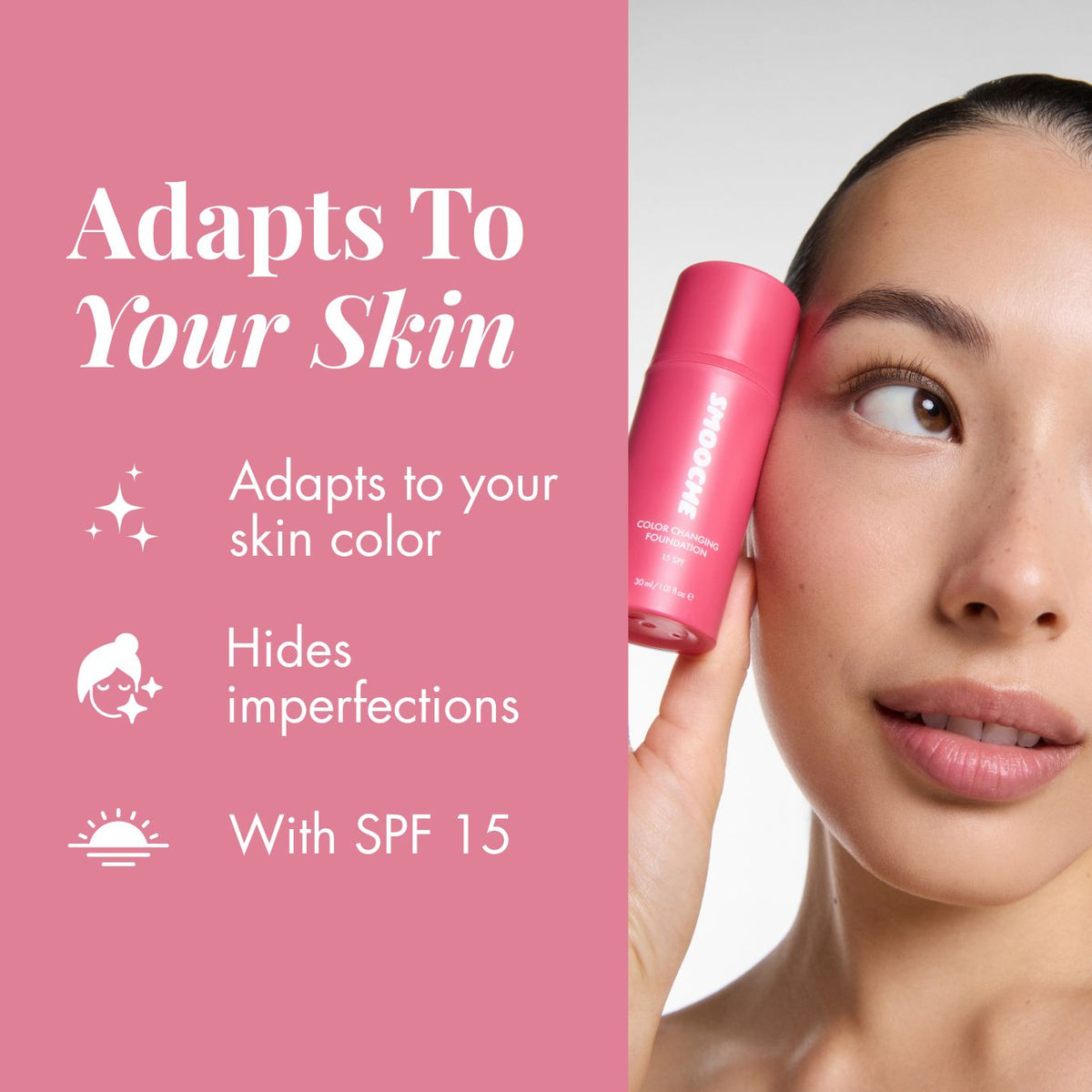
- No shade to pick: One shade shifts to match as you blend, which helps when the shade you wore for years has stopped matching.
- Coverage in thin layers: A single pump gives medium coverage, and you build only where a spot needs more.
- Soft, velvety matte finish: It looks its best over skin that has had its moisturizer.
It is non-comedogenic and dermatologist-tested, and it arrives with free shipping and a 30-day money-back guarantee. Read the full details and ingredient list, or pair it with something from our face collection.
Which Skin Tones Does a Color Changing Foundation Suit?
A color changing foundation suits the skin tones within its shade range, and that range is set by the brand. Our Color Changing Foundation is made for all skin tones, so there is no shade range for you to check.
Other one-shade formulas can cover a narrower band, and a formula built for a limited range can look ashy on skin outside it. If you are comparing brands, read each stated range before you buy.
A shifting shade earns its keep after 50. Mature skin can shift in tone over the years, especially with sun exposure and age spots, so the bottle you matched a decade ago may look off today. Ours forms its color on your face each morning, so it matches the skin you have now.
The common mistake is testing on the back of your hand only. Test on your jaw and check it in daylight by a window. Our tips to find your foundation shade without going to a store help with that.
Will a Color Changing Foundation Turn Orange on Mature Skin?
A color changing foundation can turn orange or darker on mature skin for the same reason any foundation can: skin oil, moisturizer and sweat mix with the pigment over the day. The only reliable way to know how a formula behaves on your skin is a full-day wear test.
Holding its color was part of the brief for ours: it is a long-wear foundation, designed to stay put without oxidizing or fading. Your skin still has a say. Even on drier skin the T-zone may still produce oil, so the forehead and nose are where a change shows first, which is why our steps end with translucent powder there.
Wear-test on a day you are mostly at home, and check the color by the same window in the morning, at midday and in the late afternoon. Compare your jaw and neck as well as your cheeks, because the neck shows a mismatch first.
This does not apply when the color looks wrong right after blending. That usually means the white has not fully turned yet, so keep blending. Our guide to why foundation turns orange and how to fix it has more.
Is the SPF in a Color Changing Foundation Enough?
The SPF 15 in a color changing foundation is not enough on its own for daily sun protection, so wear a broad-spectrum SPF 30 sunscreen underneath, as the American Academy of Dermatology advises.
Ours has SPF 15, and we give you the same advice. Cleveland Clinic dermatologist Dr. Amy Kassouf advises applying sunscreen with at least SPF 30 before makeup. She points out that SPF testing uses a much thicker layer than anyone wears, so you get about half the protection printed on the label. The AAD recommends a broad-spectrum, water-resistant sunscreen of SPF 30 or higher for skin in your 60s and 70s. Treat the SPF 15 in our foundation as a small extra on top.
The common mistake is skipping sunscreen on cloudy days or indoors near windows. Reapply about every two hours when you are outside, as Cleveland Clinic advises.
How Does Our Color Changing Foundation Wear on Mature Skin?
Our Color Changing Foundation wears well on mature skin that is moisturized first, because one shade handles the match and thin, buildable layers keep product light over fine lines.
Start with the shade, since that is the part most of us tired of first. There is only one, so you are no longer comparing six beiges under store lighting (and picking the wrong one anyway).
The coverage is buildable, so redness on the cheeks or an age spot can have a second layer while the skin around your eyes keeps the first thin one. A thin layer leaves less product to gather in a crease, and that is how a light hand helps it sit better over lines.
We built the long-wear formula for full days: it is designed to stay put for up to 16 hours without fading, oxidizing, or transferring onto clothes or masks.
On the label side, the formula has SPF 15 and is free from parabens and sulfates, vegan and cruelty-free. It does contain parfum, so patch test first if your skin is sensitive.
One limit is worth repeating: one layer gives medium coverage, so build it only where you want more. See how our one-shade foundation goes on.
Your Color Changing Foundation Checklist for Mature Skin
- Moisturize, apply SPF 30 or higher, then wait a few minutes before makeup.
- Start with one pump, dotted on the center of your face.
- Blend outward until the color stops shifting, and press over lines.
- Powder only the T-zone, and lightly.
- Wear-test for a full day and check your jaw in daylight.
Frequently Asked Questions
Do Self-Adjusting Foundations Really Work?
Self-adjusting foundation is another name for color changing foundation, and it works when your skin tone sits within the brand's stated shade range. The formula starts pale and shifts as you blend, which removes the guesswork of choosing a shade. Ours is made for all skin tones.
Is Color Changing Foundation Good for Women Over 50?
Color changing foundation can be a good fit for women over 50 who want an easier shade match without testing a dozen bottles. Results depend on prepping dry skin and applying thin layers. Check the shade range of any brand you compare; ours is made for all skin tones.
Can Color Changing Foundation Cover Age Spots?
Color changing foundation with medium coverage can soften the look of age spots, but it may not hide darker spots fully. Ours is buildable, so press a second thin layer onto the spot, then add concealer on top if you still want more.
Should Mature Skin Use a Matte or Dewy Foundation?
Mature skin usually looks best with a satin or natural finish, according to makeup artists Essie Cohen and Jenny Patinkin, quoted by Byrdie, because very matte can look flat and very dewy can look shiny. Our foundation has a naturally soft finish with a velvety matte texture, so we suggest extra moisturizer underneath and powder on the T-zone only.
Is Color Changing Foundation Safe for Sensitive Mature Skin?
Color changing foundation is as safe for sensitive mature skin as any other liquid foundation, because the color change comes from the pigments and the ingredient list decides how your skin reacts. Ours is dermatologist-tested and non-comedogenic, and its ingredient list includes parfum, so patch test along your jaw first if your skin is sensitive. Stop using it and see a dermatologist if it stings or reddens.
Ready to See It on Your Own Skin?
If you are done guessing shades, try our Color Changing Foundation. Shipping is free, and your order is covered by our 30-day money-back guarantee.
Featured in this guide
Our Color Changing Foundation
One shade that adapts to your skin tone as you blend, with buildable medium coverage and SPF 15.
Shop the foundation30-day money-back guaranteeKeep reading