

Best Foundation for Mature Skin: How to Choose One That Works

You find a foundation you like, wear it for years, and then one morning it looks different. By mid-morning it has crept into the lines around your eyes, and the shade that used to disappear now shows a faint edge at your jaw. You're not alone, and it isn't always the bottle's fault. Mature skin changes, so what it needs from foundation changes too.
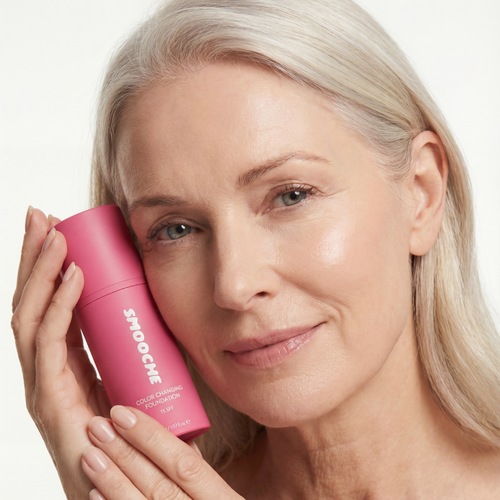
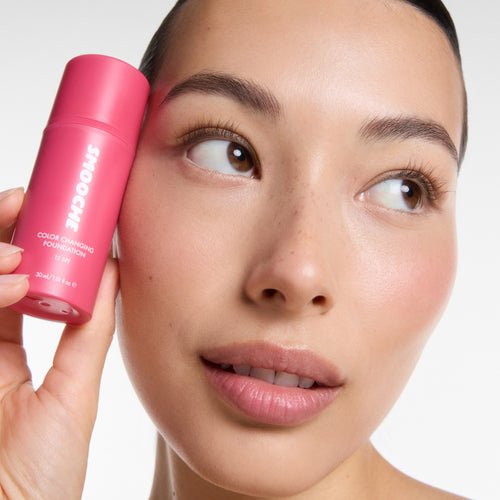
Here's the short answer: the best foundation for mature skin is a liquid or cream with a natural or soft finish, medium coverage you can build in thin layers, and a shade that matches the skin you have today. That last part is why we made our Color Changing Foundation, one shade that shifts to your skin tone as you blend, made for all skin tones. This guide walks through texture, finish, coverage and skin type, so you can judge any bottle, ours included.
Key Takeaways
- The answer in one line: Choose a liquid or cream foundation with a natural or soft finish and medium coverage you can build.
- Powder is the riskier pick: ABC News notes that powders can settle into fine lines, and its dermatologist calls liquid the best choice for mature skin.
- Soft matte is fine, flat matte isn't: A velvety matte over moisturized skin looks like skin, while a chalky matte over dry skin looks tired.
- Coverage comes from layers: One thin layer everywhere and a second only on spots looks lighter than one thick coat.
- Match the skin you have now: Our Color Changing Foundation forms its shade on your face as you blend, and it is made for all skin tones.
What Our Customers Ask
Two questions people search about our foundation matter most when you're choosing one after 50: "is Smooche foundation good for sensitive skin" and "does Smooche foundation work on dark skin". Here are our straight answers.
On sensitive skin, our Color Changing Foundation is dermatologist-tested, non-comedogenic and free from parabens and sulfates. Its ingredient list does include parfum, so if your skin reacts easily, wear it along your jaw for a day before you go all over.
On deeper skin, it works too: we made it for all skin tones, deeper skin included. Check the match on your jaw in daylight, as you would with any foundation. The full ingredient list and our application steps are on our Color Changing Foundation page.
What Is the Best Foundation for Mature Skin?
The best foundation for mature skin is a lightweight liquid or cream with a natural or soft finish and medium coverage you can build in thin layers. It should match your skin tone today, sit comfortably over moisturizer, and stay put through the day without turning orange or gathering in fine lines.
No single bottle wins for everyone, because mature skin varies a lot. Some women over 50 mostly fight dryness, others still have an oily forehead and nose, and plenty have both on the same face. What helps across the board is a formula that spreads thin, because thin layers have less product to collect in creases.
Heavy formulas are the usual reason foundation looks cakey on older skin. A thick paste clings to dry patches, and by afternoon it has gathered in the lines around your mouth and eyes.
The common mistake is shopping by words like "ageless" or "anti-aging" on the box. Those words describe the marketing, while texture, finish and coverage decide how a foundation looks on your face at 3pm. For the label details, see what to look for in a foundation that won't settle into lines.
Liquid, Cream or Powder: Which Foundation Is Best for Mature Skin?
Liquid and cream foundations are usually best for mature skin, because they blend into the skin and move with it, while powder foundation tends to sit on top and collect in lines. Dermatologist Dr. Michelle Henry told ABC News, "For mature skin, liquid foundations are the best choice."
Powder isn't off the table. If your skin is oily or you like a matte look, a finely milled powder can work, pressed lightly only where you shine. The trouble starts when powder goes over dry skin, because it soaks up what little moisture is on the surface and shows every flake.
Sticks and cushions sit in between. A creamy stick behaves much like a cream, and a cushion lays down a thin liquid layer that is easy to control.
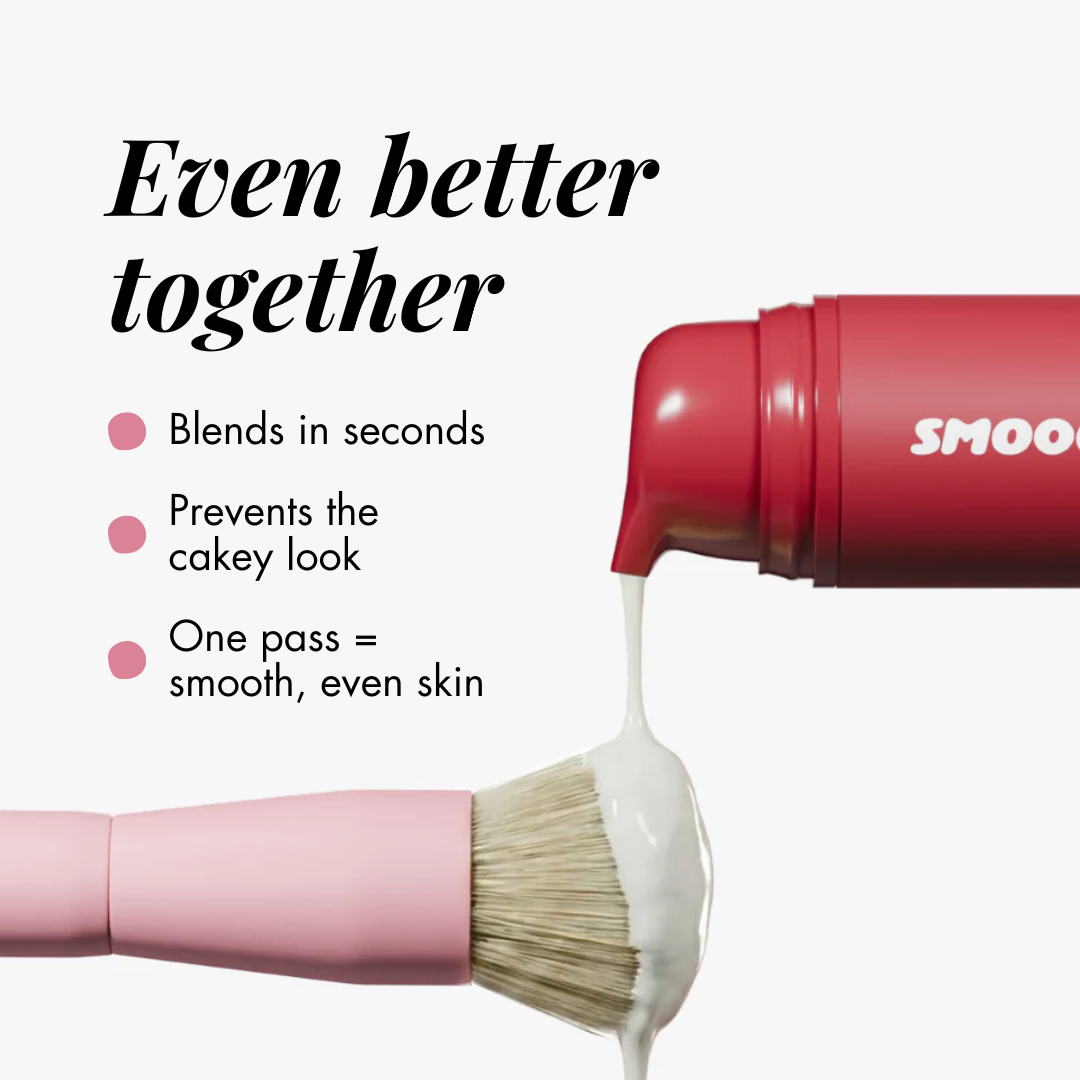
Ours is a liquid, so it spreads thin, and its color forms on your skin during blending. You add more only where you want it. If you like a brush, our Liquid Blender Brush is designed for liquid and cream products.
If your skin is oily all over, the advice shifts a little: a liquid foundation plus a light dusting of powder on the T-zone usually looks better than a full powder foundation.
Which Foundation Finish Looks Best on Mature Skin?
A natural, satin or soft matte finish usually looks best on mature skin, because ultra-matte formulas can make skin look flat and dry, while very dewy ones can turn shiny on an oily T-zone by midday.
"Avoid matte" is common advice for older skin, and it's right about the chalky mattes that cling to dry patches. A soft matte over well-moisturized skin behaves differently. The moisturizer underneath keeps the surface supple, and the matte finish keeps shine down where you get it.
Ours sits in that second group, with a naturally soft finish and a velvety matte texture. We suggest a good moisturizer first and powder on the forehead and nose only, so your cheeks keep looking like skin.
The common mistake is judging a finish in the bathroom mirror under warm bulbs. Check it by a window around lunchtime, when daylight shows shine and dryness as they really are.
Should Mature Skin Wear Full Coverage or Lightweight Foundation?
Mature skin tends to look best in a lightweight foundation built up to medium coverage, adding more only where needed, because a full coverage layer over the whole face sits heavier in lines than coverage placed on the spots that need it.
Wanting full coverage for mature skin is completely fair. Redness, sun spots and uneven tone are real, and covering them is a reasonable goal. The question is where the coverage goes. A thin layer everywhere, then a second pressed onto redness or a dark spot, gives you the coverage without a heavy film around your eyes and mouth.
Our Color Changing Foundation gives medium coverage from one pump and builds from there. It won't give heavy, mask-like coverage in a single layer, and on mature skin we think that's a good thing. For a spot darker than two thin layers can handle, tap a little concealer on top and soften the edge with your ring finger.
If the rest of your routine needs a refresh too, our makeup tips for older women cover eyes, brows and lips.
Our Pick for Mature Skin
If you're looking for the best color changing foundation for mature skin, here is ours in short. Our Color Changing Foundation is based on Korean beauty innovation. It starts out white and turns to your shade during blending, so there is one bottle instead of a wall of beiges to choose from.
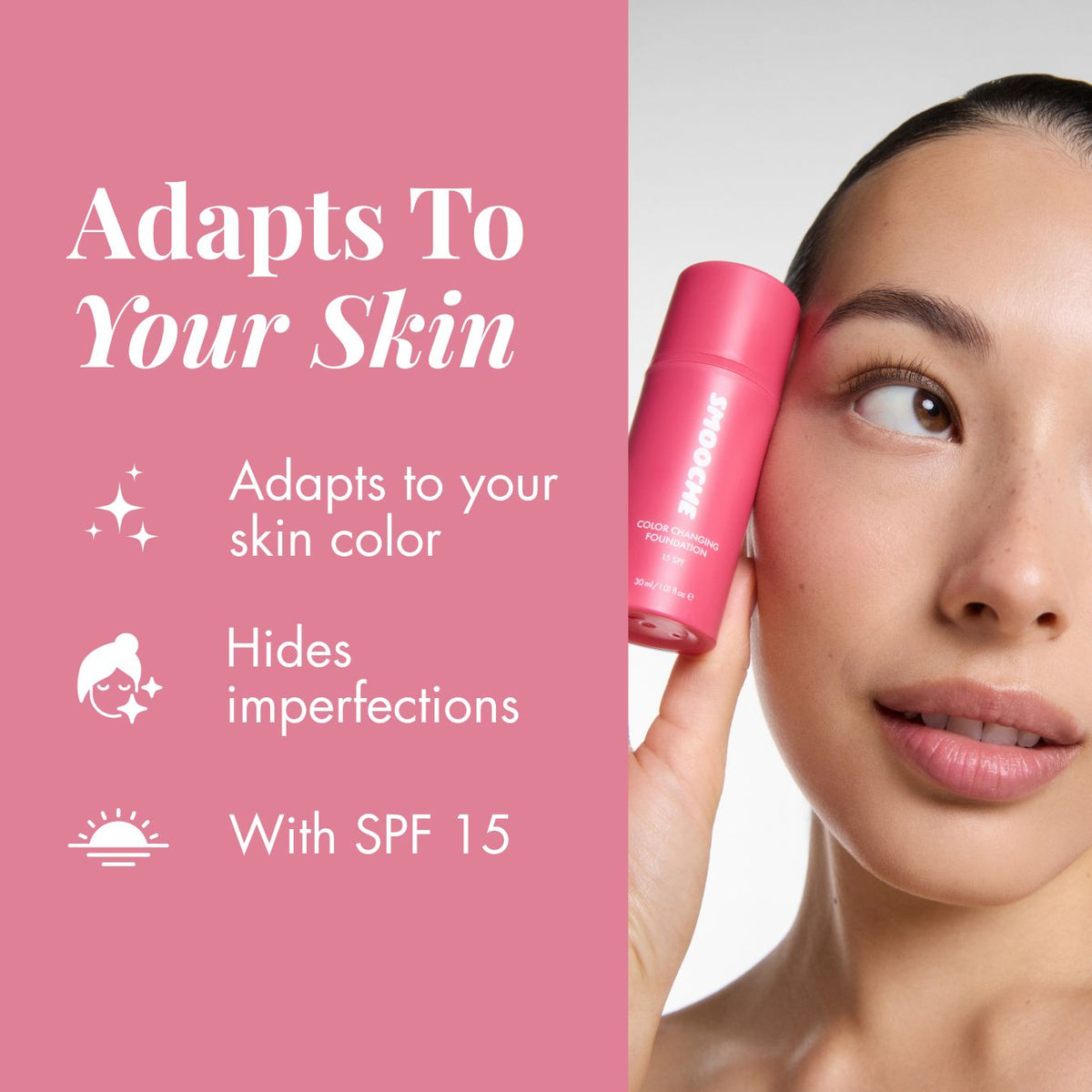
- Shade: One bottle for all skin tones, matching the tone you have today.
- Coverage: Medium from one pump, buildable over redness and spots.
- Wear: Made for long days, we designed it to hold for up to 16 hours with no fading, oxidizing or transferring.
On top of that it has SPF 15, and it is vegan and cruelty-free. See the foundation, its ingredients and our how-to steps, or browse the rest of our face collection.
What Is the Best Foundation for Dry Mature Skin?
The best foundation for dry mature skin is a liquid or cream applied over a rich moisturizer, because no foundation looks smooth on skin that is dry underneath.
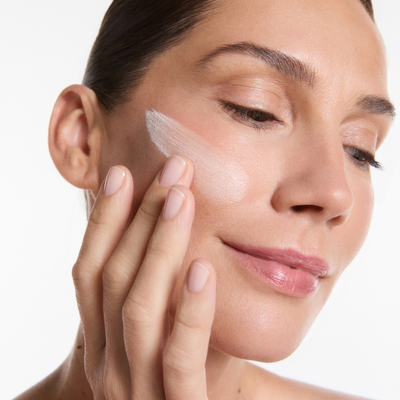
Prep does most of the work here. The American Academy of Dermatology recommends a cream or ointment over a lotion for dry skin, applied while skin is still slightly damp, and names hyaluronic acid, glycerin, shea butter and dimethicone among the ingredients that help. Let it sink in while you make your coffee, then start your foundation. Glycerin is in our foundation's formula too, though no foundation replaces a good moisturizer.
Then use less foundation than you think you need. Dry patches grab pigment, so a thin layer pressed in sits better than one dragged across the skin.
The common mistake is setting dry skin with a full face of powder. Keep powder to the places that actually shine, if any, and skip it on the cheeks.
Does the Best Foundation Change Over 40, 50 and 60?
The best foundation often does change with age, because skin over 50 and over 60 tends to be drier and to shift in tone, so a formula and shade that worked at 40 may not suit you now.
In your 40s the change is often small: a little more dryness and the first lines that foundation finds by late afternoon. Over 50, many women notice tone changes as well, from sun spots or redness, and the shade they wore for years starts to look slightly off. Over 60, comfort comes first, so a lighter formula, a softer finish and less product overall tend to flatter more than extra coverage.
The shade part is where a one-shade foundation earns its place. Ours forms its color on your skin as you blend, so it follows the tone you have now rather than the one you had when you last bought a bottle. For applying it over fine lines step by step, read our guide to color changing foundation for mature skin.
The common mistake is rebuying the same shade number out of habit. Recheck your match on your jaw in daylight every year or so, and use our shade-matching tips if you're buying online.
Does Drugstore Foundation Work on Mature Skin?
Drugstore foundation can work well on mature skin, because texture, finish and shade decide the result far more than the price does.
An inexpensive liquid with a natural finish will usually look better on dry skin than an expensive matte with full coverage. When you compare bottles at any price, read the formula type and finish first, check that the shade range includes you, and wear it for a full day before you decide.
That full-day test is easier when returns are simple. If you buy foundation online, look for a clear return policy. Ours is covered by our 30-day money-back guarantee, so you can try it at home on your own schedule.
This does not apply when you need a shade outside most ranges. Then the brand's shade range matters more than where you buy it.
Is Our Color Changing Foundation the Right Pick for You?
Our Color Changing Foundation is the right pick if you like medium coverage you can build and you're tired of shades that stop matching. Skip it if you want full matte coverage in one layer.
Curious how one shade can turn into yours? Here's the science behind color changing foundation. And if your current foundation turns orange by lunch, our guide to foundation oxidizing explains why and what helps.
Your Mature Skin Foundation Checklist
- Pick a liquid or cream before a powder foundation.
- Look for a natural, satin or soft matte finish.
- Moisturize with a cream while your skin is still slightly damp.
- Start with a thin layer and build coverage only on redness and spots.
- Keep powder to the areas that shine.
- Check your shade on your jaw in daylight.
- Put on a broad-spectrum SPF 30+ sunscreen before any foundation, as the AAD recommends.
Frequently Asked Questions
What Kind of Foundation Is Best for Women Over 60?
Foundation for women over 60 works best as a light liquid or cream with a natural finish, applied thinly over moisturizer. Skin at this age is often drier, so comfort and a soft finish usually flatter more than heavy coverage. Check your shade again too, since skin tone can change over the years.
Is Full Coverage Foundation Bad for Mature Skin?
Full coverage foundation is not bad for mature skin, but one thick layer across the whole face tends to sit in lines. Build coverage in thin layers only where you need it. Our foundation gives medium coverage that you can build on redness and spots.
Should You Use Powder on Mature Skin?
Powder on mature skin works best in small amounts, on the areas that get shiny such as the forehead and nose. A full face of powder over dry skin can look cakey and settle into lines, so a light translucent powder is usually enough.
Can Foundation Make Wrinkles Look Worse?
Foundation can make wrinkles look more visible when it is too thick, too matte or applied over dry skin, because product collects in creases. A thin layer of liquid or cream foundation over moisturized skin softens the look of lines instead.
What Is the Best Color Changing Foundation for Mature Skin?
The best color changing foundation for mature skin is one whose shade range includes your skin tone and whose finish suits your skin type. Ours is made for all skin tones, gives medium buildable coverage and has a soft, velvety matte finish, so moisturize first if your skin is dry.
Ready to Try a Foundation That Matches You Today?
If your old shade has stopped matching, our Color Changing Foundation is worth a try. Shipping is free, and the 30-day money-back guarantee gives you time to wear-test it at home.
Featured in this guide
Our Color Changing Foundation
One shade that adapts to your skin tone as you blend, with buildable medium coverage and SPF 15.
Shop the foundation30-day money-back guaranteeKeep reading