

How to Stop Your Foundation from Oxidizing (And the Fix That Actually Works)

You apply your foundation and it looks perfect. Clean, even, matched to your skin. Then two hours later you catch your reflection and realize your face has turned noticeably darker. Sometimes orange, sometimes ashy. Your neck is still your natural color. Your foundation is not.
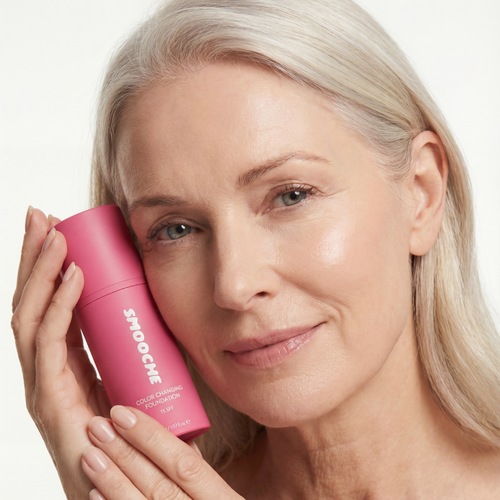
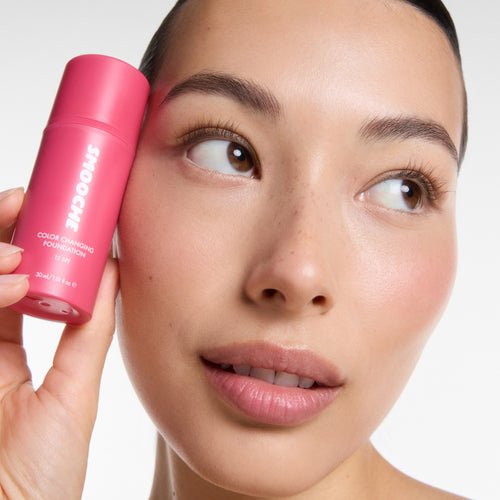
This is oxidation. Your foundation is reacting with the oil and warmth on your skin, and the color shifts as the day goes on. Good prep slows it down, and so does a formula built to hold its color, which is why we designed our Color Changing Foundation to stay put without fading, oxidizing or transferring. If this sounds familiar, you're not alone. Here's exactly why it happens, and how to stop it.
Key Takeaways
- What oxidation is: Foundation reacts with your skin's oil, warmth and the air, so it looks darker or more orange a few hours after you apply it.
- Not all darkening is oxidation: Some foundations look deeper within minutes as their water evaporates, which is called dry-down.
- Oily skin sees it most: Extra sebum and hot, humid weather make the shift stronger.
- Concealer does it too: Concealer often shifts sooner, because it sits in thicker layers on small, oily areas like the sides of the nose.
- The fix has two parts: Prep and set your skin, then wear a long-wear formula designed to resist the shift, like our Color Changing Foundation.
What Our Customers Ask
The questions people search most often about our Color Changing Foundation are "does Smooche foundation really work" and "how to apply Smooche foundation". Both lead to an obvious follow-up for a foundation that shifts shade as you blend: does it keep shifting through the day?
The color change is meant to happen once, while you blend. After that, the formula is built to hold that shade through the day.
Applying it well starts with prep: moisturized skin, one pump in thin layers, and translucent powder on the T-zone to finish. Our foundation's full application steps are on the product page.
What Does Oxidize Mean in Makeup?
In makeup, "oxidize" means a product changes color after you put it on, usually turning darker, more orange or slightly gray. Oxidation happens when the foundation reacts with your skin's oil, warmth and the air, so a shade that matched at 8am can look off by noon.
The word comes from chemistry, where oxidation is a reaction with oxygen. In makeup talk, people use "oxidize" for any color shift that shows up after application, mostly with foundation and concealer. Cosmetic chemist Ginger King explained to Byrdie that the oil on your skin, and even the oil inside the foundation, can oxidize and change the color (Byrdie, updated October 2025).
Why Does Foundation Oxidize?
Foundation oxidizes because the product meets oil, warmth and air on your skin, and the pigments change color as they react. Cosmetic chemist Rhonda M. Davis of Alquemie Product Development Group says a foundation can also oxidize on its own if it contains trace metals or certain natural oils, has no antioxidants, or is stored badly (The Style & Beauty Doctor, 2019).
Davis adds that sebum, skin pH and your environment can amplify the reaction for some people. That is why the same bottle behaves one way on your friend and another way on you.
The formula is the part we control as the maker. Antioxidants are on Davis's list, and our ingredient list includes tocopheryl acetate, a form of vitamin E.
How Long Does It Take Foundation to Oxidize?
Foundation oxidation builds over a few hours, while the other common color change, dry-down, settles within minutes of application. Davis points out that hydrocarbons, resins and a high water content can make a shade look darker as it dries, which is not oxidation at all. The result? Two causes that look the same in the mirror but behave differently on the clock.
The common mistake is judging a new foundation the moment you finish blending. Check it after it dries, then again in daylight a few hours later. Our guide on how to find your foundation shade without going to a store walks through a simple at-home wear test.
Why Does Foundation Oxidize More on Some People Than Others?
Foundation oxidizes more on some people because four things vary from face to face: oily skin, skin pH, the foundation itself, and heat and humidity.
Oily Skin
Oily skin gives the foundation more sebum to react with. Board-certified dermatologist Joshua Zeichner told Byrdie that foundation oxidation "occurs more commonly in people who have oily skin," which is why an oily T-zone usually shifts first (Byrdie, 2025). It is also why our own application steps end with translucent powder on the T-zone.
Skin pH
Healthy skin is slightly acidic. Lambers and colleagues estimated the natural skin surface pH at about 4.7, and found that plain tap water raised it for up to six hours (International Journal of Cosmetic Science, 2006). A harsh cleanser can shift that balance too, which may change how your foundation behaves on top.
The Foundation Itself
Liquid foundation oxidizes faster than powder, because liquids carry oils and water that can react, while powder holds its pigment in a dry base. King told Byrdie that powder has fewer issues, and that foundations with antioxidants such as vitamin E hold their color better.
Heat and Humidity
Warm temperatures speed up chemical reactions, and humid air adds moisture to the mix. King notes that oilier skin oxidizes foundation faster in hot, humid weather, which is why the same foundation behaves differently in summer and winter.
Our Color Changing Foundation at a Glance
The Smooche Color Changing Foundation is our liquid foundation that goes on pale and shifts to your skin tone as you blend. It is based on Korean beauty innovation. It is made for all skin tones and gives medium, buildable coverage. It is not the right pick if you want a heavy, full-coverage finish from one layer.
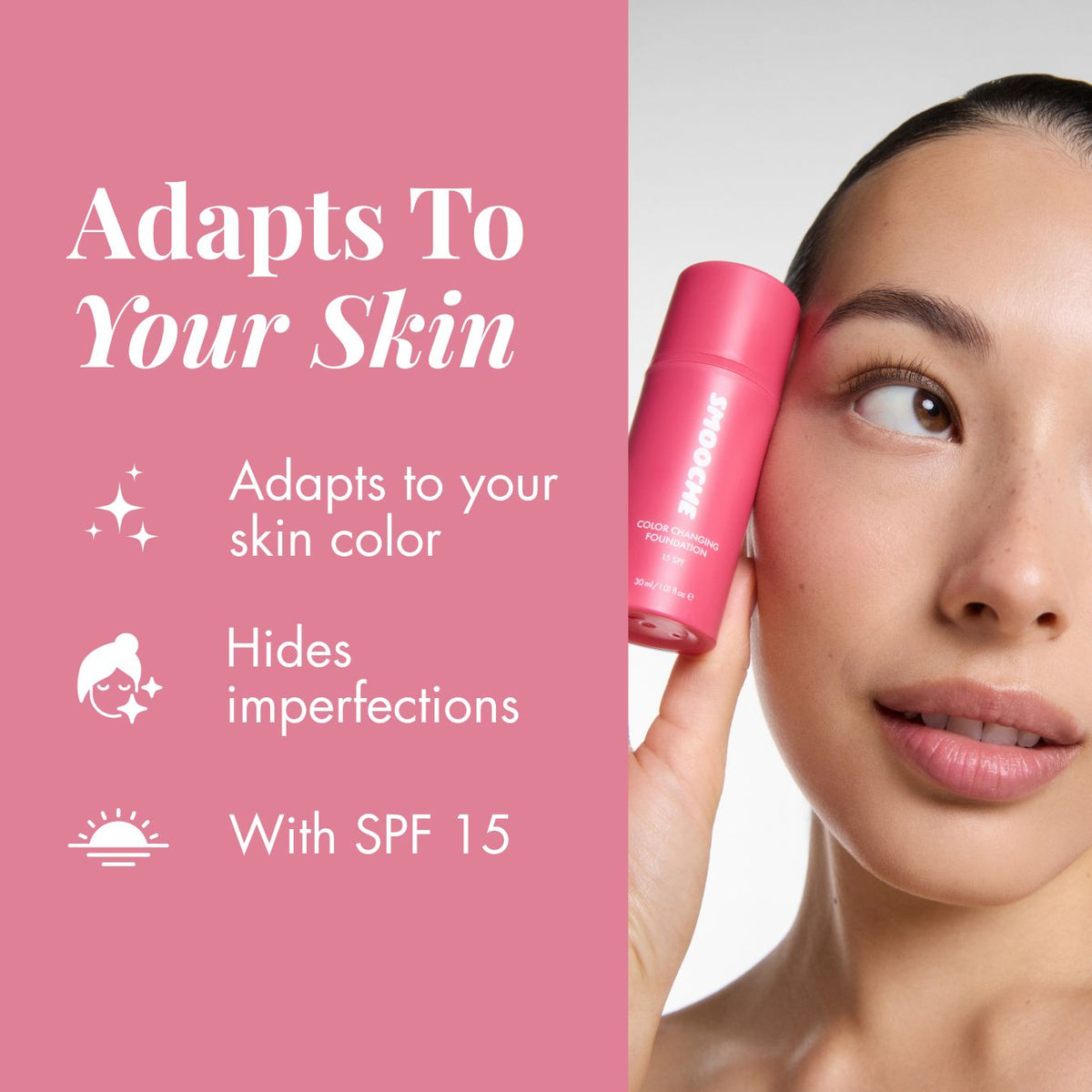
- Long-wear formula: We designed it to hold its color through the day, so the shade you blend in the morning is the shade you keep.
- Everyday basics: It has SPF 15 and is dermatologist-tested and non-comedogenic.
- Vegan and cruelty-free: The formula is also free of parabens and sulfates.
It ships free and comes with a 30-day money-back guarantee. Take a closer look at the foundation, or browse our face makeup collection for the rest of your routine.
What Is Oxidation in Concealer?
Oxidation in concealer is the same color shift you see in foundation: the concealer turns darker, orange or gray a few hours after you apply it. Concealer often shifts sooner because it sits in thicker layers on small areas like the sides of the nose and the chin, where skin tends to be oilier.
Use a small amount, blend it thin and set it with a light dusting of translucent powder. With our foundation, concealer goes on after you blend, only on the spots that still need it. This does not apply when the "orange" look comes from a color corrector, which is meant to be peach or orange on purpose, or when under-eye concealer creases and simply looks darker in the fold. If creasing is the real problem, read our guide to foundation that doesn't settle into fine lines.
The Traditional Fixes (And Why They Only Sort of Work)
The traditional fixes for foundation oxidation are primer, setting powder and spray, and a lighter hand, and each one slows the reaction rather than stopping it.
| Fix | What it does | Where it falls short |
|---|---|---|
| Primer | Puts a barrier between skin oil and foundation | Delays the shift; oil still comes through by afternoon |
| Setting powder and spray | Powder absorbs oil; spray blocks humid air | Oily skin still needs a blot by mid-afternoon |
| Thinner layers | Less pigment on the skin to react | Less coverage |
Primer
A primer creates a barrier between your skin and the foundation, so less oil reaches the pigment and the reaction slows. Davis calls primers ideal as that barrier, and Zeichner adds that a mattifying primer also absorbs excess oil. If your face still shifts by 3pm, the primer has absorbed all the oil it can hold.
Setting Spray and Powder
Powder absorbs excess oil and water, and a setting spray adds a barrier against humid air, which Davis recommends if you live in a humid climate.
Going Lighter on Application
Using less foundation means less pigment on your skin to react, which reduces the visible shift. The trade-off is thinner coverage. Our own steps work this way: one pump for natural medium coverage, then a second thin layer only where you want more. Thin layers also sit better over fine lines, and our guide to color changing foundation for mature skin shows how to build coverage only where you need it.
Fixing Foundation That Has Already Oxidized
If your foundation has already oxidized by lunch, blot the oil off first, then press a light layer of translucent powder over the T-zone. Blotting removes the oil that is still reacting, and the powder softens the darker tone. If the shade is far off, take the foundation off that area and reapply a thin layer rather than piling powder on top.
The Fix That Actually Works: Our Color Changing Foundation
The fix that actually works is good prep plus a foundation built for the problem: our Color Changing Foundation, a long-wear formula designed to stay put for up to 16 hours without fading, oxidizing or transferring.
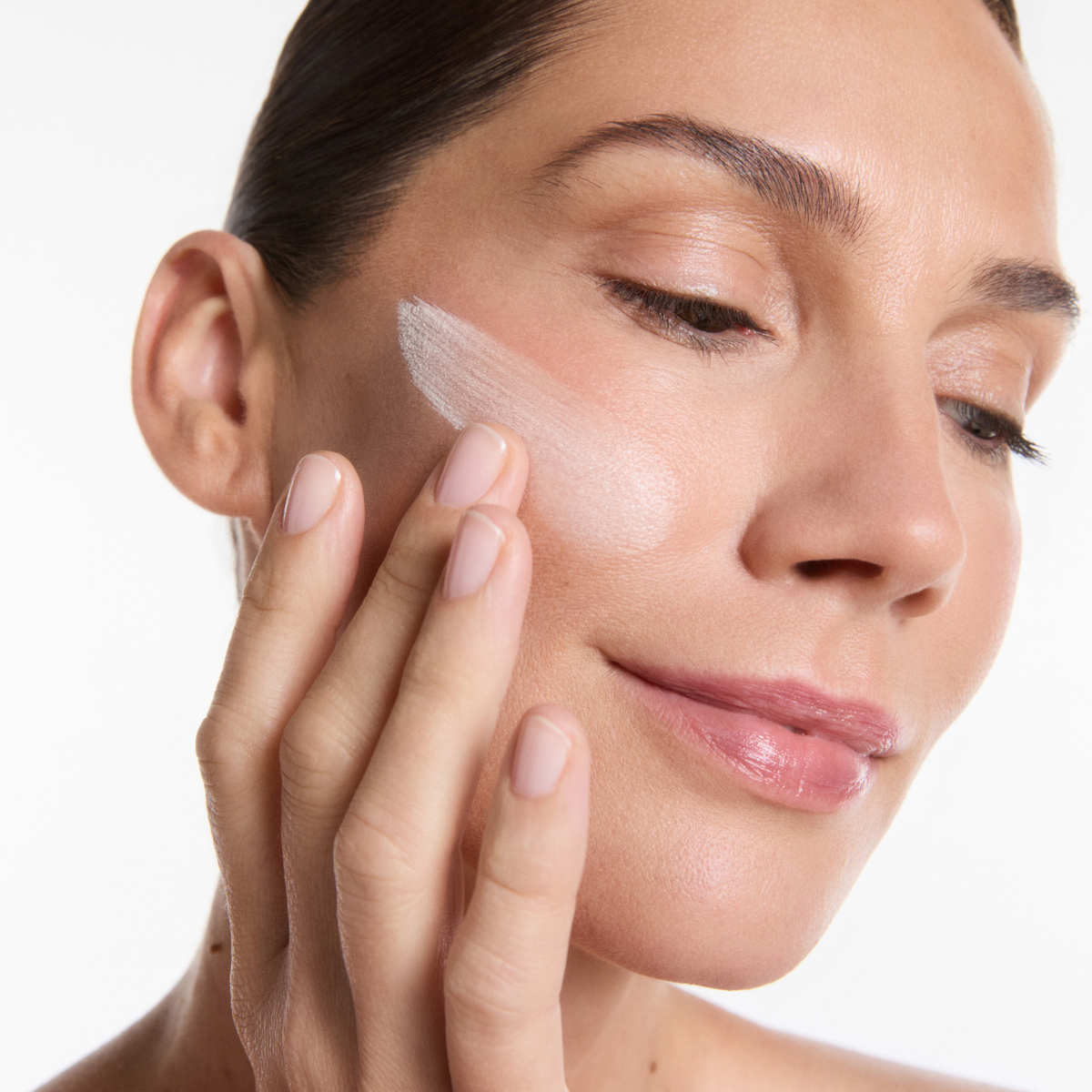
It also removes the shade guess. Our foundation goes on pale and shifts to your tone as you blend, because its micro-encapsulated pigments react to your skin's warmth and undertones. There is no shade to guess wrong, so you are not starting the day in a color that was already a touch too warm. We explain the chemistry in how color changing foundation works.
We tell every customer to apply it the same way: moisturized skin and your usual primer or hydrating cream first, one pump dotted on the forehead, cheeks, nose and chin, blended outward from the center, and translucent powder on the T-zone to finish.
Here's the honest part. Every face is different, and our foundation still meets oil and heat on yours, so keep the prep habits above and give it a full day of wear before you judge it. It is made for all skin tones, so see how our long-wear formula goes on.
Your Foundation Oxidation Checklist
- Moisturize first: Let it sink in for a few minutes before foundation.
- Blot oily areas: Press a tissue on your T-zone before you apply.
- Use a brush or sponge: Fingers carry oil into the bottle and onto your face.
- Use thin layers: Start with one pump and build coverage only where you need it.
- Wait before you judge: Check the shade after dry-down and again a few hours later, in daylight.
- Set your T-zone: Dust translucent powder where you get oily.
- Close the bottle: Store foundation capped, away from heat and sunlight.
Frequently Asked Questions
How Do You Stop Foundation From Oxidizing?
You stop foundation from oxidizing by controlling the oil and heat it reacts with: blot, prime, apply thin layers and set with translucent powder. A long-wear formula helps too, and we designed our Color Changing Foundation to stay put without oxidizing.
What Is a Non Oxidizing Foundation?
A non oxidizing foundation is a foundation made to keep its color through the day with little visible shift, and no foundation can promise zero shift on every skin. Ours is one example: the Smooche Color Changing Foundation is a foundation designed to resist oxidizing, with a long-wear formula made to stay put. Wear-test it for a full day on your own skin, and our 30-day money-back guarantee makes that test risk-free.
Why Does My Foundation Turn Orange?
Your foundation turns orange when its pigments react with oil and warmth on your skin, pulling the color warmer and deeper over a few hours. A shade that was slightly too warm to begin with makes the orange more obvious, so check your undertone as well as your depth. Our foundation goes on pale and shifts to your tone as you blend, so there is no shade to guess wrong.
Does All Foundation Oxidize?
Some foundations oxidize and others barely shift, because the reaction depends on the oils, water and antioxidants in the formula and the amount of oil on your skin. King told Byrdie that liquids oxidize faster than powders. The only reliable way to know is a full-day wear test on your own skin.
Should You Buy a Shade Lighter If Your Foundation Oxidizes?
Buying a shade lighter is a workaround that makeup artist Jamie Greenberg suggests to Byrdie readers who love a foundation that oxidizes, and it trades a dark afternoon for a pale morning. A better first step is a wear test: if the oxidized shade still looks like you after three hours, keep your shade and improve the prep.
Can Foundation Oxidize in the Bottle?
Foundation can oxidize in the bottle if it is left open, stored somewhere warm or sunny, or kept past its shelf life. Davis advises keeping the product closed to limit air exposure, and Zeichner puts the average shelf life of a foundation at 12 to 18 months (Byrdie, 2025).
Ready to Try It?
If foundation still turns on you by noon, pair the checklist above with a formula designed to hold its color. Try our Color Changing Foundation: it ships free and comes with a 30-day money-back guarantee.
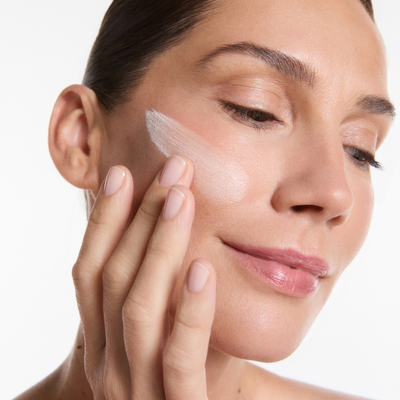
Featured in this guide
Our Color Changing Foundation
One shade that adapts to your skin tone as you blend, with buildable medium coverage and SPF 15.
Shop the foundation30-day money-back guaranteeKeep reading