


Peptide Skincare: What Peptides Do for Your Skin and How to Use Them

You turn a serum bottle around in the shop, and the ingredient list reads like a chemistry exam: palmitoyl pentapeptide-4, acetyl hexapeptide-8, copper tripeptide-1. Every one of them promises something about fine lines. You're not alone if you put it back on the shelf without knowing what any of it means.
Here's the short version: peptides are short chains of amino acids, and in skincare they act as messengers that nudge your skin toward smoother, firmer-looking results. Different peptides do different jobs, and some have far more research behind them than others. That is why we built our Reverse-time Peptide Serum around two of the best-known ones, Argireline and Matrixyl. This guide explains what each type does, what the evidence says, and how to fit peptides into your routine.
Key Takeaways
- The answer in one line: Peptides are short amino acid chains that signal your skin to look smoother and firmer.
- Not all peptides are equal: A 2020 review in Frontiers in Chemistry sorts cosmetic peptides into signal, carrier and neurotransmitter-inhibitor peptides.
- Some peptides have better evidence: Matrixyl was tested in a double-blind study of 93 women that included a placebo group, as reported in that review.
- Peptides take time: Cleveland Clinic suggests giving any new skincare product about three months.
- Sunscreen still comes first: Peptides are an extra on top of daily SPF, never a replacement for it.
What Our Customers Ask
If you've searched "Smooche peptide serum reviews", you probably want two answers before you buy: what is in it, and how long it takes.
What's in it is on the label, and we name every active. Our Reverse-time Peptide Serum pairs Argireline and Matrixyl with niacinamide and vitamin C, plus tranexamic acid for dark spots and collagen with hyaluronic acid for an instant plumper look. It has no fragrance and no drying alcohol.
How long it takes depends on what you're watching. A dewy glow shows up within days, a brighter, more even tone over the next few weeks, and the look of fine lines softens from week four onward. You'll find every ingredient and our step-by-step routine on the Reverse-time Peptide Serum page.
What Are Peptides in Skincare?
Peptides in skincare are short chains of amino acids, the building blocks of proteins such as collagen and elastin. Applied to the skin, they work as messengers: some send signals linked to collagen, some carry trace minerals, and some relax the look of expression lines.
A peptide is a small piece of a protein, and skincare brands add specific peptides to a formula for specific jobs.
Cleveland Clinic describes the theory simply: peptides give your skin the chance to make more elastin and collagen, which can help it stay stronger and more flexible. Dermatologist Dr. Wilma Bergfeld, quoted in the same article, adds that some peptides can be anti-inflammatory.
Getting into the skin is the hard part. The Frontiers review notes that how well a peptide passes into the skin depends on several factors, and that many cosmetic peptides are given a fatty "palmitoyl" tail to help them move across the skin more effectively.
The common mistake is reading "peptide" on a label and assuming every one does the same thing. The name only tells you it is a short protein fragment. What it does depends on which peptide it is.
What Do Peptides Do for Your Skin?
Peptides do one of three main jobs, according to the 2020 Frontiers in Chemistry review by Errante and colleagues: signal peptides prompt the skin's own collagen support, carrier peptides deliver trace minerals, and neurotransmitter-inhibitor peptides soften the look of expression lines.
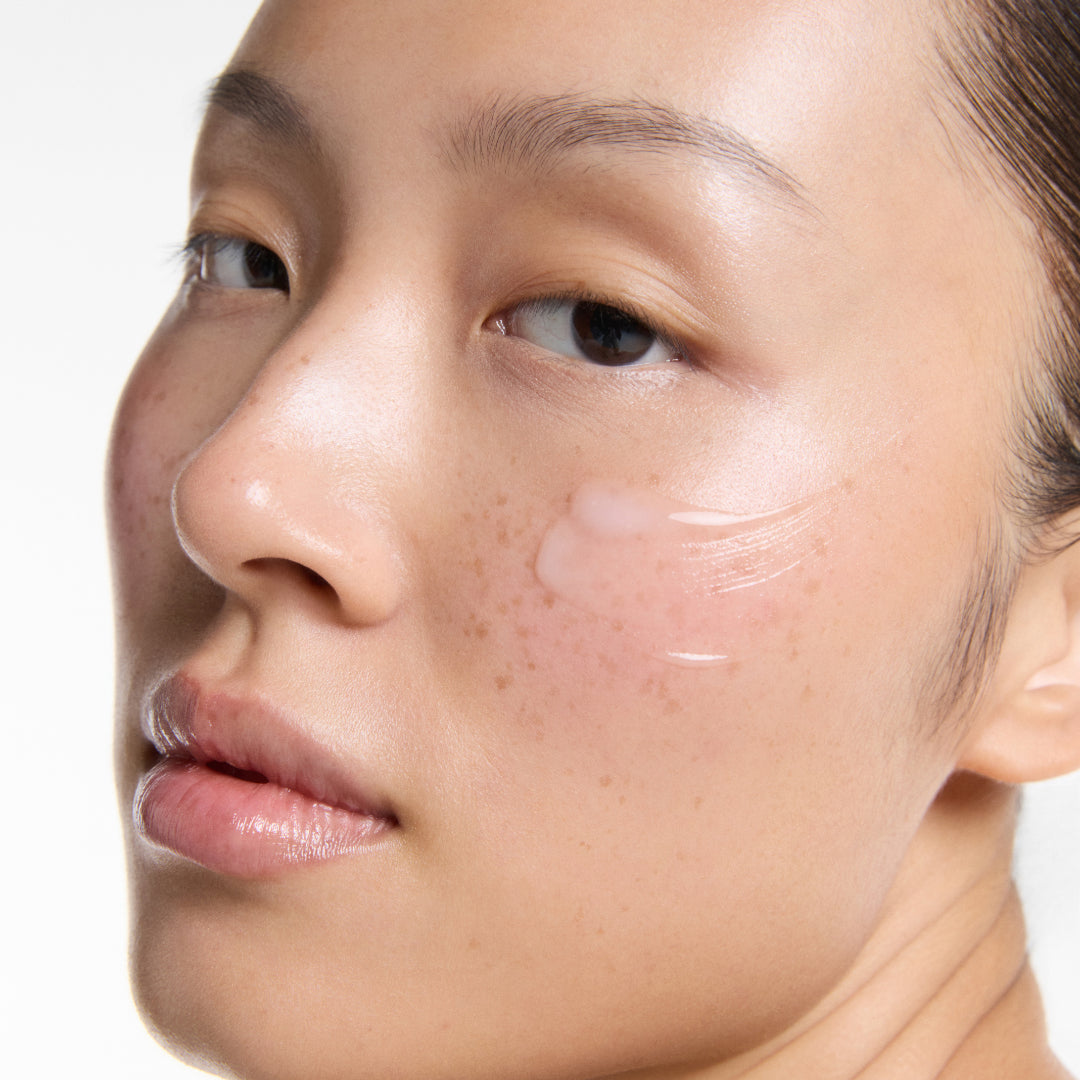
Signal peptides: These copy small fragments of collagen, which the review describes as triggering feedback that supports new collagen. Palmitoyl pentapeptide-4, sold as Matrixyl, is one example.
Carrier peptides: These bind a trace mineral and help it reach the skin. Copper tripeptide-1 (GHK-Cu) is the classic one.
Neurotransmitter-inhibitor peptides: These are the peptides aimed at expression lines, the ones that come from frowning and squinting. Argireline is one example.
Because the three groups work in different ways, some formulas combine them. Ours pairs a signal peptide with a neurotransmitter-inhibitor peptide, Matrixyl with Argireline, for the look of fine lines and firmness. We then add niacinamide, vitamin C and tranexamic acid for dark spots and dullness.
This does not apply to "peptide" claims on products that never name the peptide. If a brand won't say which one it uses, there is no way to tell which of the three jobs it is meant to do.
Which Peptides Have the Most Research Behind Them?
Palmitoyl pentapeptide-4 (Matrixyl) has a placebo-controlled study behind it, while the research on many other peptides is thinner and sometimes comes only from the companies that make them.
Matrixyl is based on a small fragment of type I collagen. The Frontiers review reports that it improved the look of fine lines and wrinkles in a double-blind study of 93 women that included a placebo group (Robinson and colleagues, 2005). A placebo group matters, because it lets researchers compare the peptide with the same kind of product without it.
Argireline (listed on our label as acetyl hexapeptide-8) is a synthetic peptide modeled on a fragment of a protein called SNAP-25. The same review cites clinical studies that support it, but gives fewer details, and one of those studies tested it together with another peptide. Its evidence is real but lighter than Matrixyl's.
For some other peptides, the review notes that the only data available come from the manufacturer. That is worth remembering when a new peptide appears with a big percentage attached to it.
We chose Argireline and Matrixyl because they are two of the most researched peptides in skincare. We would rather build on those than on a peptide with a new name and no independent studies.
What Are Copper Peptides?
Copper peptides are carrier peptides, most often GHK-Cu, where a three-amino-acid peptide holds a copper ion and helps deliver it to the skin. You will mostly see them in firming products.
The Frontiers review explains why: copper is used by an enzyme involved in forming collagen and elastin, and the GHK peptide binds copper on its own, which makes the copper easier to absorb. It also notes that copper-related peptides have been linked to lower activity of enzymes that break collagen down.
So should you look for copper peptides? They are one option among several. Our Reverse-time Peptide Serum does not contain copper peptides. We went with Matrixyl and Argireline, plus niacinamide and vitamin C for tone, because together they cover lines, firmness and dark spots in one step.
The common mistake is stacking several strong serums at once to cover every peptide. Cleveland Clinic suggests adding one new product at a time, so you can tell which one is working.
Our Reverse-time Peptide Serum at a Glance
Our Reverse-time Peptide Serum is formulated in Korea and combines two well-known peptides with brightening and hydrating ingredients. It is made for anyone who wants one step for fine lines, dark spots and dullness.
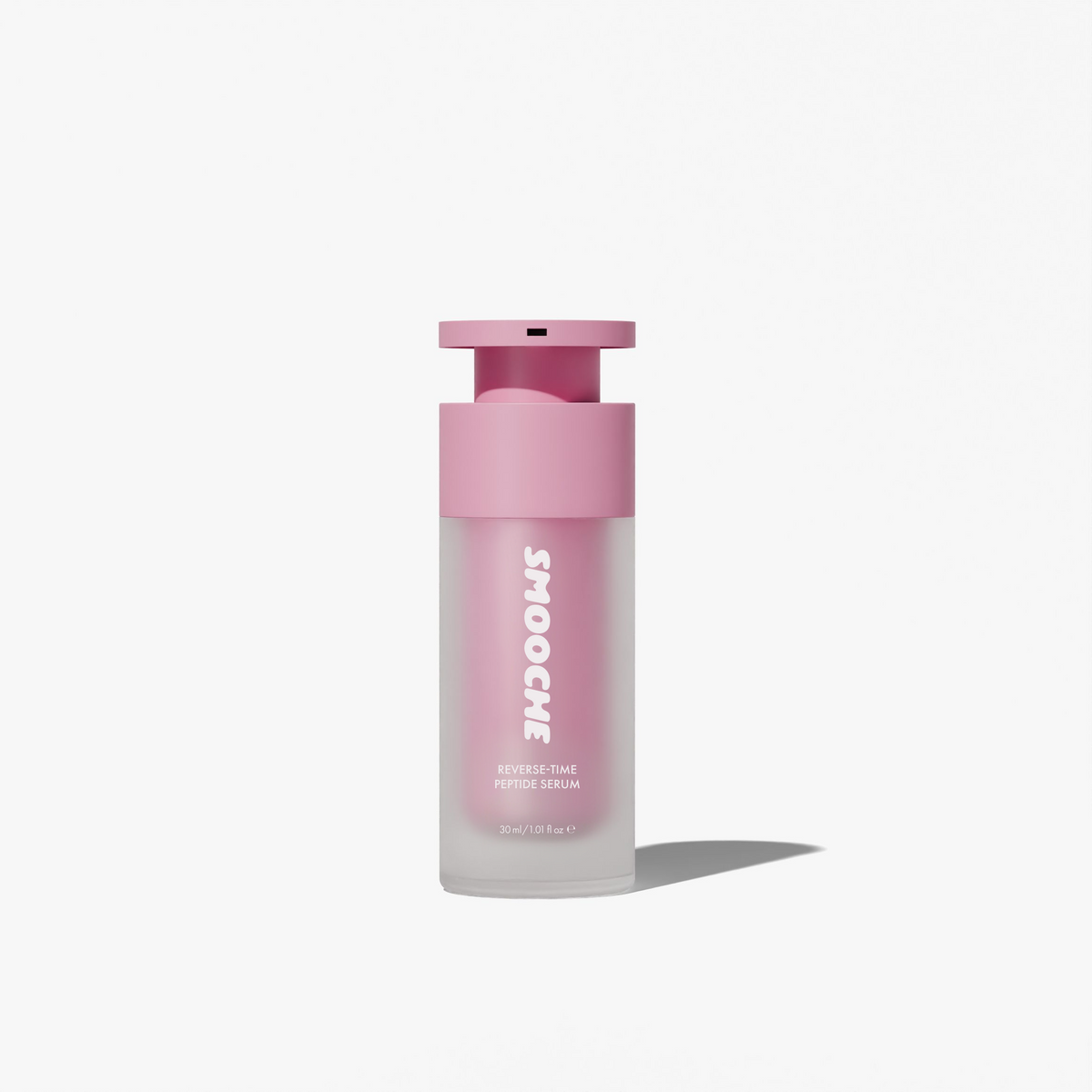
- Peptides: Argireline and Matrixyl for the look of fine lines and firmness.
- Brightening: Niacinamide, vitamin C and tranexamic acid for the look of dark spots and dullness.
- Instant plump: Collagen and hyaluronic acid, so skin looks plumper and dewier from the first drop.
There is no fragrance and no drying alcohol, and it comes with a 30-day money-back guarantee. Read the full ingredient list, or pair it with our Ultra Peptide & Collagen Lifting Mask.
How Long Do Peptides Take to Work?
Peptides take weeks rather than days to change how fine lines look, so give a peptide product at least a month of daily use, and around three months before you judge it, as Cleveland Clinic advises for any new skincare product.
Some ingredients show results sooner than peptides. In our serum, collagen and hyaluronic acid make skin look plumper and dewier from the first drop, which is why it can feel like it works long before the peptides have done their part.
With our serum, the order looks like this. The plump, dewy glow comes within days. A brighter, more even tone follows over the next few weeks, from the niacinamide, vitamin C and tranexamic acid. Then the peptides take over, softening the look of fine lines from week four onward.
The common mistake is switching products every few weeks. Cleveland Clinic calls skincare "more of a marathon than a sprint," and changing too often means nothing gets the time it needs.
How Do You Use a Peptide Serum in Your Routine?
Use a peptide serum on clean skin, morning and evening, before moisturizer and before sunscreen in the morning. A few drops are enough for the face and neck.

Here are the steps from our product page:
- Start clean: Apply morning and evening to cleansed, slightly damp skin.
- Two to three drops: Warm them between your fingertips, then press into your face and neck.
- Focus: Pat an extra drop onto expression lines, crow's feet and dark spots.
- Seal: Follow with our Color Changing Foundation for an even better result. In the morning, sunscreen goes on before it.
Sunscreen is the step that protects everything else. Cleveland Clinic calls daily sunscreen the most important product in an anti-aging routine and recommends SPF 30 or higher.
This does not apply when you are adding a new active at the same time, such as a retinol. Introduce one product, give it a few weeks, then add the next, so you know what your skin is reacting to.
Are Peptides Worth It?
Peptides are worth adding once the basics are in place: a gentle cleanser, moisturizer and daily sunscreen. They are an extra step for the look of fine lines and firmness, and the formula they sit in matters too.
Cleveland Clinic is clear that cleansing, moisturizing and protecting your skin from the sun come first, and that the rest is optional. It also notes that how a product is formulated affects how well its peptides work.
That is why we built ours as one complete serum rather than a single-peptide add-on. You get two researched peptides, three brightening ingredients and instant hydration in one step. Use it morning and night, and if your skin hasn't changed, you can email us within 30 days of delivery for a full refund.
If you are over 50 and also rethinking your makeup, our foundation guide for mature skin pairs well with this one.
Your Peptide Skincare Checklist
- Put on a broad-spectrum SPF 30 or higher every morning.
- Check that the label names its peptides, such as Matrixyl or Argireline.
- Apply two to three drops to clean, slightly damp skin, morning and evening.
- Press an extra drop onto expression lines and dark spots.
- Add one new product at a time.
- Give it at least four weeks for lines and around three months before you judge.
Frequently Asked Questions
Do Peptides Actually Work?
Peptides can soften the look of fine lines, but how well they work depends on the peptide and the formula. Matrixyl has a double-blind study of 93 women behind it, while some newer peptides rely only on manufacturer data, according to a 2020 review in Frontiers in Chemistry.
Do Peptides Build Collagen?
Peptides are thought to give the skin the chance to make more collagen and elastin, as Cleveland Clinic explains, which can help skin stay stronger and more flexible. Signal peptides such as Matrixyl copy small fragments of collagen linked to collagen renewal.
Can You Use Peptides Every Day?
Peptide serums are made for daily use, and we recommend applying ours morning and evening. Use two to three drops on clean skin, then moisturizer, and finish with sunscreen in the morning.
Are Peptides Better Than Retinol?
Peptides and retinol are different ingredients, and one is not a direct replacement for the other. Cleveland Clinic describes retinoids as very effective, and peptides as an optional extra. If you use both, add them one at a time so you can see how your skin responds.
Which Peptides Are in Our Serum?
Our Reverse-time Peptide Serum contains Argireline (acetyl hexapeptide-8 on the label) and Matrixyl (palmitoyl pentapeptide-4). We pair them with niacinamide, vitamin C, tranexamic acid, collagen and hyaluronic acid.
Ready to Try Peptides?
If you want one serum for fine lines, dark spots and dullness, try our Reverse-time Peptide Serum. It comes with our 30-day money-back guarantee, so you can try it at home first.
Featured in this guide
Our Reverse-time Peptide Serum
Argireline and Matrixyl with niacinamide and vitamin C, to visibly soften the look of fine lines.
Shop the serum30-day money-back guaranteeKeep reading