



Castor Oil for Eyebrows: Does It Actually Help Them Grow?

You've probably seen the videos (usually at midnight, when you meant to be asleep): someone brushes castor oil through their brows every night and swears they look thicker a month later. Castor oil for eyebrows is a popular home remedy, but no published study has shown that it makes brows grow. What it can do is coat and condition the hairs you already have, so they may look glossier and a little fuller.
If fuller-looking brows are the goal, we make a serum for that job. Our Eyebrow Growth Serum is a water-based nightly serum for the brow line, with no castor oil on its ingredient list.
Here's what the research says, how to use castor oil safely, and how it compares with our serum. This guide is for brows that are a little sparse, not for sudden or patchy brow loss.
Key Takeaways
- The short answer: No study has shown castor oil grows eyebrows; it conditions existing hairs so they can look shinier and fuller.
- Where the claim comes from: The best-known "evidence" is a computer modeling study that never tested castor oil on real brows.
- Safety first: Patch test for 7 to 10 days, as the American Academy of Dermatology suggests, and keep the oil out of your eyes.
- Use very little: One drop on a clean spoolie covers both brows.
- A routine made for brows: Our Eyebrow Growth Serum is a water-based nightly step, and our Fibre Brow Gel is for a fuller look the same day.
What Our Customers Ask
People search two things about our serum: "does Smooche eyebrow serum work" and "how to use Smooche eyebrow serum". Since you're here about castor oil, we'll add a third: is there castor oil in it?
There isn't. Castor oil is not on the ingredient list, and the first ingredient is Aqua.
On whether it works, we'll be straight with you. The serum is a cosmetic for fuller, thicker-looking brows, and it takes patience and consistency. Plan on 8 to 12 weeks of nightly use before you make up your mind. The four steps we give every customer are further down this post.
Does Castor Oil Help Eyebrows Grow?
Castor oil has not been shown to help eyebrows grow, and no published study has tested castor oil on eyebrows. A 2022 systematic review found no strong evidence that castor oil supports hair growth, only weak evidence for added shine. Castor oil can coat and soften existing brow hairs so they look fuller, but it does not create new hairs.
The review, by Phong and colleagues in the Journal of Drugs in Dermatology (2022), looked at 22 articles on coconut, castor and argan oil for hair. Nothing in it tested eyebrows directly, because those studies do not seem to exist. Cleveland Clinic family physician Kevin Hopkins, MD, puts it plainly: there is no data to show that applying pure castor oil to your hair promotes growth.
If you tried it for months and never saw new hairs, you're not alone. When brows do look better after a few weeks, the likely reason is cosmetic: the oil leaves a glossy film on each hair, so it looks darker and shinier.
This does not apply when your brows thin suddenly or in patches: see a dermatologist, who can look for the cause. For over-plucked brows, our guide on whether eyebrows grow back has the timeline.
What Does Castor Oil Actually Do to Brow Hairs?
Castor oil acts as a heavy conditioner for brow hairs: it coats each strand with a thick film that adds shine, softens coarse hairs and can make sparse brows read as slightly darker and fuller.
Castor oil is mostly ricinoleic acid, a fatty acid that gives it its sticky, dense texture. That thickness is why the oil clings to the hair instead of soaking in. The same review found weak evidence that castor oil can increase hair luster. So the conditioning is real, and a bottle is cheap.
The common mistake is reading that shine as growth. Glossy, darker-looking hairs are easier to see, so brows can look fuller even though nothing new has appeared. If a fuller look during the day is what you want, brow makeup is the shorter path: ours is a tinted fiber gel that grips onto each hair while adding subtle color and volume.
Where Did the Castor Oil Growth Claim Come From?
The castor oil growth claim mostly traces back to a 2015 computer modeling study that predicted ricinoleic acid might block a hair-loss-linked enzyme, without ever testing castor oil on people.
In that study, Fong and colleagues used software to model how 389 plant compounds might fit prostaglandin D2 synthase, an enzyme linked to hair loss. Ricinoleic acid was one of five compounds flagged as worth testing. The authors wrote that lab and human testing would be needed before drawing any conclusions about hair loss.
You'll still find blog posts describing this as proof that castor oil "regrows hair." That is a big leap, because a computer prediction is where research begins. The common mistake is trusting any article that cites "a study" without saying what kind. For brows that look thicker today, see our tips on how to make thin eyebrows look thicker.
How Do You Use Castor Oil on Eyebrows Safely?
To use castor oil on your eyebrows safely, apply a very small amount of pure, cold-pressed oil to clean, dry brows at night with a spoolie or cotton swab. Keep it well away from your eyes and wash it off in the morning.
- Patch test first.
- Remove all makeup and skincare from your brows.
- Put one drop of oil on a clean spoolie or cotton swab and wipe off the excess.
- Brush it through each brow in the direction the hairs grow, keeping it off the eyelid.
- Put a towel over your pillow, because the oil can transfer (your pillowcase will thank you).
- Wash your brows with a gentle cleanser in the morning.
Less is better, because thick oil can clog pores and cause breakouts. Dr. Hopkins at Cleveland Clinic notes that pure castor oil on the skin can cause irritation and allergic reactions like contact dermatitis. Its thickness has also been linked to a rare matting of long scalp hair, described in a 2017 case report.
This routine changes when a brow serum is already part of your night. Ours goes on first, after an oil-free makeup remover or cleanser, and it has to dry fully before any other product goes on.
Our Brow Routine at a Glance
We make two brow products, and they cover the two things castor oil gets used for: a nightly brow step and brows that look fuller. They suit slightly sparse brows. Both are cosmetics, so neither one treats medical hair loss.
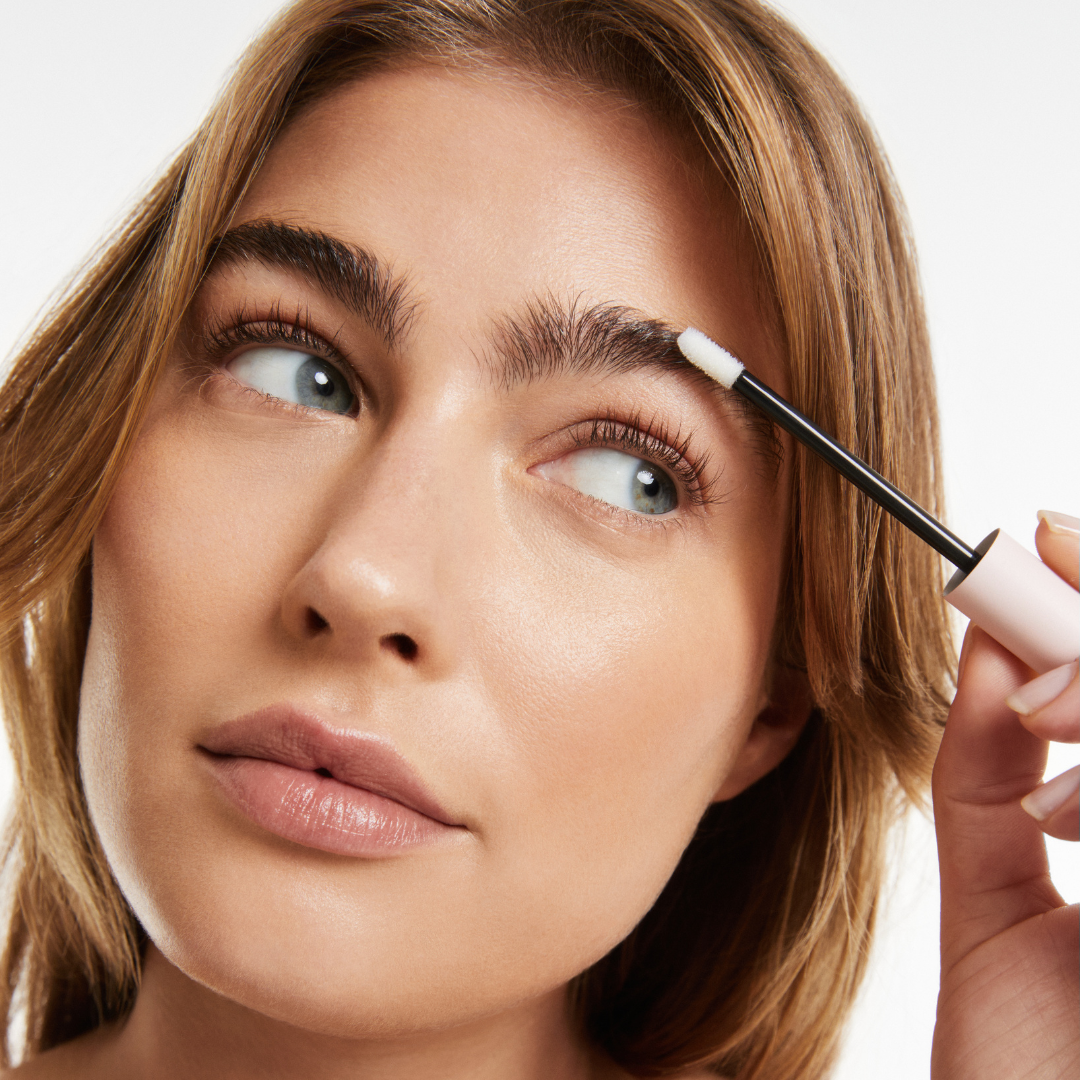
- The nightly step: Our Eyebrow Growth Serum is a water-based, leave-on serum for fuller, thicker-looking brows.
- Made to dry down: After the serum has fully dried, you can apply any other beauty products.
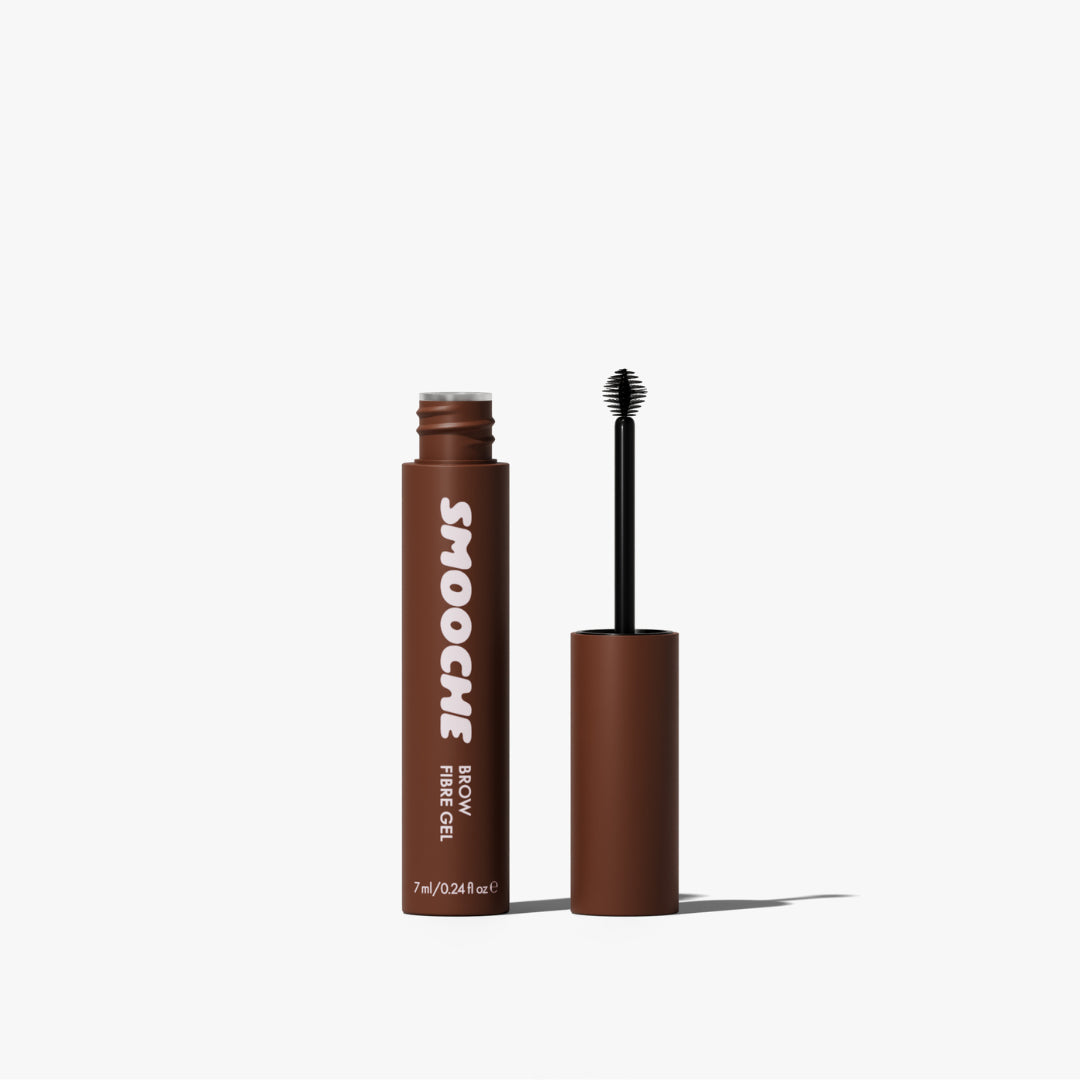
- The daytime half: Our Fibre Brow Gel is a tinted fiber gel that makes brows look fuller the same day.
Both are vegan and cruelty-free, and the serum comes with a 30-day money-back guarantee. See what goes into our brow serum.
How Do You Patch Test Castor Oil Before Using It on Your Face?
Patch test castor oil by applying it to a quarter-sized spot on the inside of your elbow or the underside of your arm, twice a day for 7 to 10 days. Use the same small amount you would put on your brows. If you see no redness, itching or swelling, it is reasonable to try it on your brows.
This is the method the American Academy of Dermatology recommends for any new skin care product. A longer test matters because allergic reactions can take days to show up. Ricinoleic acid, castor oil's main component, has been reported as a cause of allergic contact dermatitis in lipsticks and other cosmetics in medical case reports.
If a reaction appears, the AAD advises washing the product off gently and not using it again. See a dermatologist if the reaction is severe or does not settle.
The common mistake is testing for one day only. Our serum gets the same rule: patch test it before your first use.
Is Castor Oil Safe Near Your Eyes?
Castor oil is not safe to get in your eyes: Cleveland Clinic warns that castor oil in the eye can cause irritation, pain and blurred vision, and in some cases chemical injury to the eye.
Brows sit close to the eye, and oil travels. It can spread with body heat, sweat or a pillow, which is why a tiny amount and careful placement matter. If oil gets in your eye, flush it with clean water and see an eye doctor if pain or redness does not go away.
The same caution goes for our own serum: it is made for the brow line, and we still tell customers to avoid contact with the eyes.
How Does Castor Oil Compare With a Peptide Brow Serum?
Castor oil differs from a peptide brow serum in texture, ingredients and purpose: castor oil is a thick oil that stays greasy, while our serum is water-based and made for the brow line.
| Castor oil | Our Eyebrow Growth Serum | |
|---|---|---|
| What it is | One plant oil, mostly ricinoleic acid | A water-based serum with peptides, plant extracts, Panthenol and Biotin; no castor oil on the list |
| Made for | General use; people borrow it for brows | The brow line, as a leave-on nightly step |
| How it feels | Thick and greasy, sits on the hair | A thin layer that dries |
| What it does | Conditions and adds shine | A cosmetic for fuller, thicker-looking brows |
| Independent research | No study on eyebrows; weak evidence for shine in a 2022 review | No large independent trials on brow peptide serums yet, so we describe ours by what it is made for: fuller, thicker-looking brows |
| Near the eyes | Can travel, and can irritate or injure the eye | Brow line only; patch test and avoid contact with the eyes |
The texture difference is the practical one. Castor oil stays greasy, so it is a night-only step with a towel over the pillow. Our peptide brow serum goes on as one thin layer that you let dry.
Castor oil keeps two points in its favor: it costs very little, and it does soften and gloss brow hairs. Our serum's advantage is purpose: it is made for the brow line and nothing else.
The common mistake is assuming either one has strong independent proof of hair growth behind it. Castor oil has none for eyebrows, and we could not find independent, peer-reviewed trials of brow peptide serums either, so we describe ours by what it is made for: fuller, thicker-looking brows. Judge any brow product by photos taken in the same light every two weeks.
What We Use Instead of Castor Oil: Our Eyebrow Growth Serum and Fibre Brow Gel
If fuller-looking brows are why you reached for castor oil, here is the routine we would hand you: our Eyebrow Growth Serum at night and our Fibre Brow Gel in the morning.
The serum is a nightly brow care step. Its ingredient list starts with Aqua and includes Hyaluronate, Panthenol, Panax Ginseng Extract, Pumpkin Seed Extract, Biotinoyl Tripeptide-1, Myristoyl Pentapeptide-17, Oligopeptide-10, Tocopherol and Biotin. It is vegan, cruelty-free, sulfate-free and paraben-free. Here's how we tell customers to apply it:
- Remove your makeup with an oil-free makeup remover or cleanser.
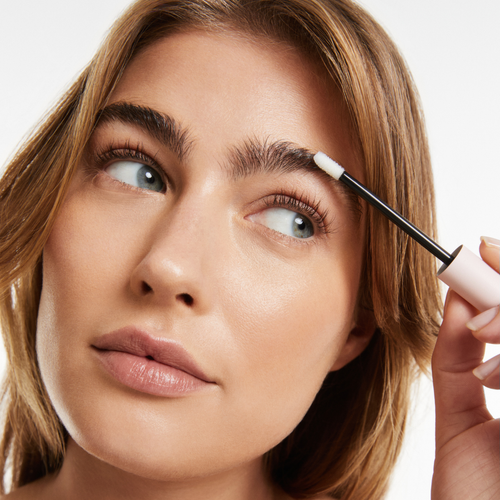
- Apply a thin layer across your entire eyebrow line, one dip per eyebrow.
- Wait until the serum has fully dried before applying any additional products.
- Allow the serum to work overnight.
That is a shorter routine than the castor oil one above, and one dip per eyebrow does the measuring for you. Patch test first, and keep it out of your eyes.
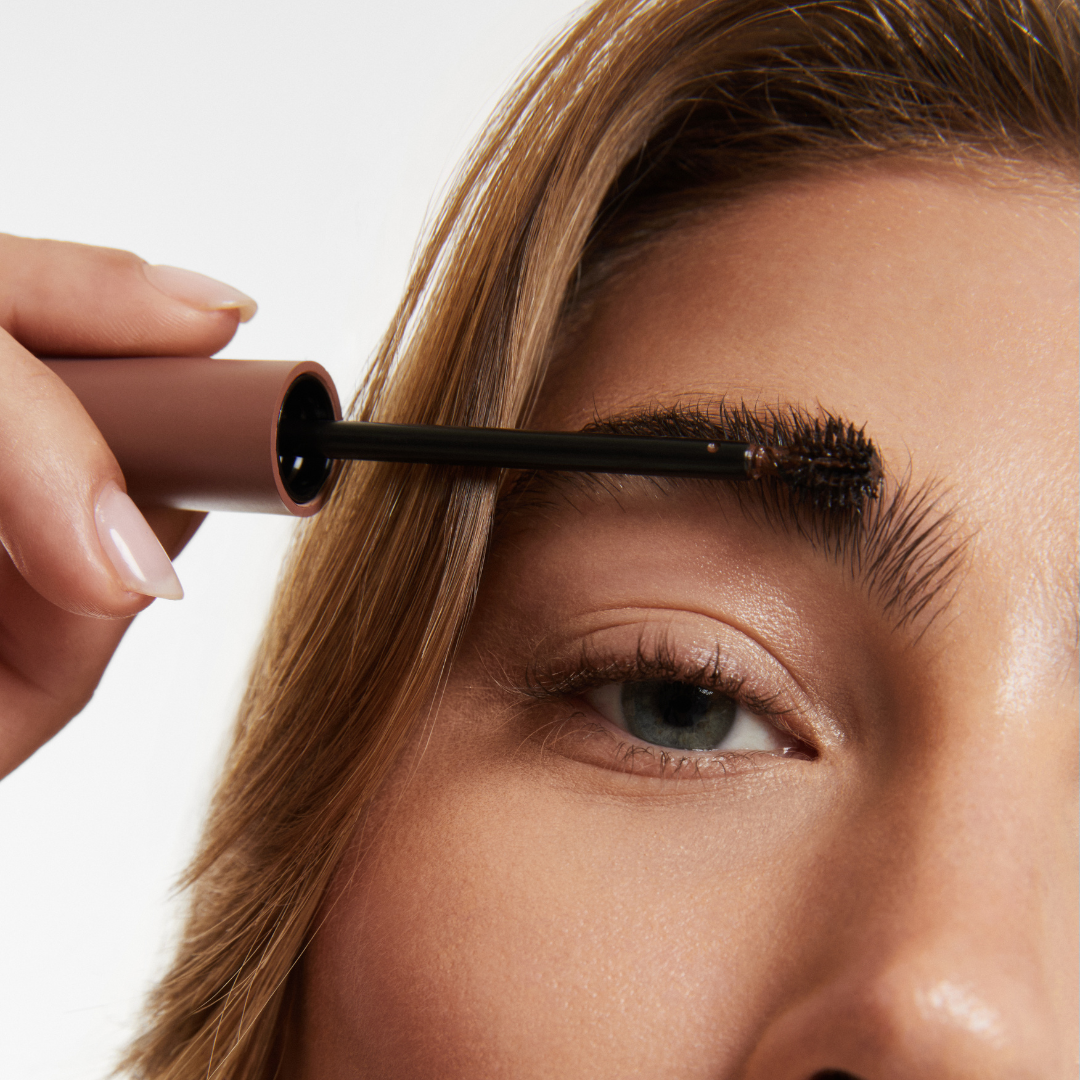
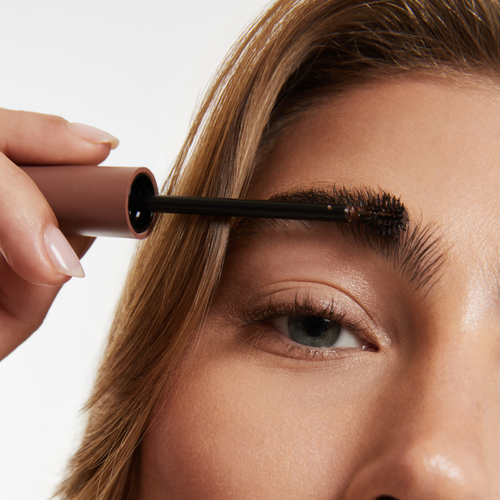
Mornings belong to the gel. It instantly builds fuller, thicker-looking brows in seconds, and the formula is smudge and waterproof and lasts 12+ hours.
Your Castor Oil Brow Checklist
- Choose pure, cold-pressed castor oil with no added fragrance.
- Patch test on your inner arm twice a day for 7 to 10 days.
- Use one drop on a clean spoolie for both brows.
- Keep the oil on the hairs and away from your eyelids.
- Stop at the first sign of redness, itching or breakouts.
- Swap to our serum at night if you would rather skip the oil.
Frequently Asked Questions
How Long Does Castor Oil Take to Work on Eyebrows?
Castor oil has no proven timeline for eyebrows, because no study has measured how long it takes to change brow hairs, and any growth claim you see is anecdotal. Any added shine shows up right away, since it comes from the oil coating the hair.
What Do Castor Oil Eyebrow Before and After Photos Show?
Castor oil eyebrow before and after photos are not proof that it works, because lighting, angle, brow makeup and the natural regrowth that follows stopping plucking all change the result. A 2022 systematic review found no strong evidence that castor oil supports hair growth.
Can You Use Castor Oil on Your Eyelashes Too?
Castor oil on eyelashes carries the same lack of growth evidence as on brows, plus a much higher chance of getting oil in your eye. Cleveland Clinic warns that castor oil in the eye can cause irritation, pain and blurred vision.
What Oil Is Best for Eyebrow Growth?
Castor, coconut and argan oil have not been proven to grow eyebrows: a 2022 systematic review found no strong evidence that any of them supports hair growth, and no other oil has better data. Oils can soften and add shine to brow hairs.
Can You Use Castor Oil and a Brow Serum Together?
Castor oil and a brow serum together is a question our application steps answer only in part. Our serum goes on first, after an oil-free makeup remover or cleanser, and other beauty products can go on once it has fully dried. Using one at a time makes it easier to see what each is doing.
Ready for a Routine Made for Brows?
Castor oil will condition your brows, and for some people that is enough. If you would rather have a routine made for the brow line, make our serum your nightly step and wear our gel during the day. Shop both in our brow range.
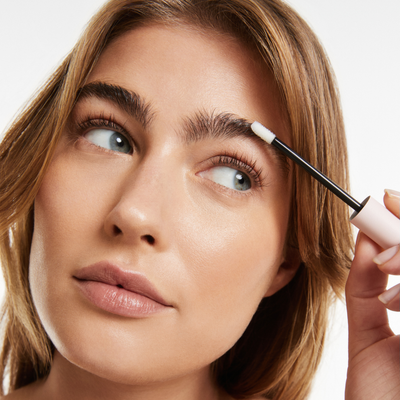
Featured in this guide
Our Eyebrow Growth Serum
Our nightly brow care step for fuller, thicker-looking brows.
Shop the brow serum30-day money-back guaranteeKeep reading
Sources
- Journal of Drugs in Dermatology, Coconut, Castor, and Argan Oil for Hair: A Systematic Review (2022)
- Journal of Ethnopharmacology, In Silico Prediction of Prostaglandin D2 Synthase Inhibitors (2015)
- International Journal of Trichology, Castor Oil: The Culprit of Acute Hair Felting (2017)
- Contact Dermatitis, Allergic Contact Dermatitis From Oleyl Alcohol in Lipstick (1997)
- Dermatitis, Allergic Contact Dermatitis From Hydrogenated Castor Oil (2009)
- Cleveland Clinic, No, Castor Oil Won't Solve All (or Any) of Your Health Problems (2023)
- American Academy of Dermatology, How to Test Skin Care Products (2021)